 Save
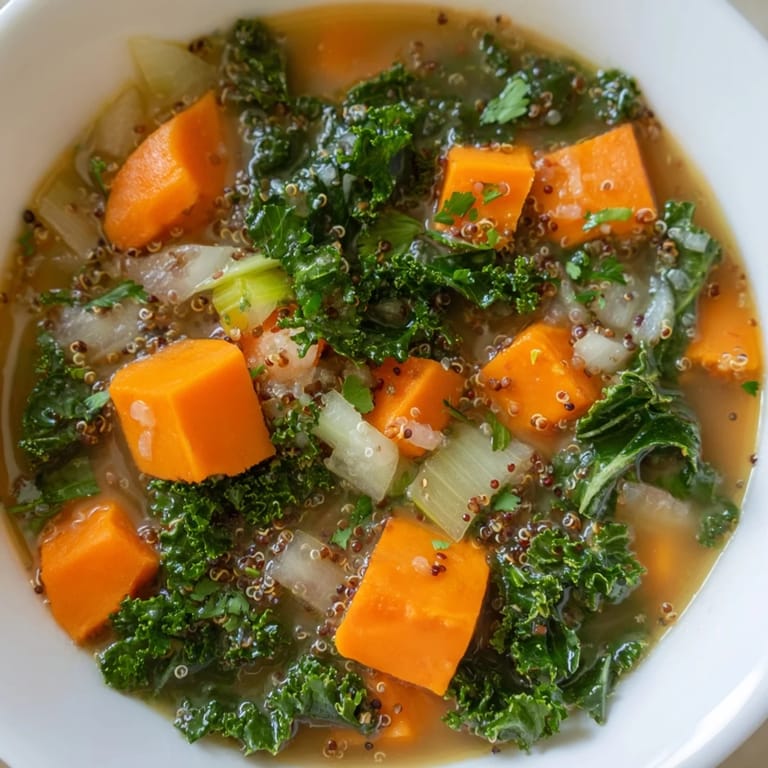
Save There's something about the first frost that makes me crave a pot of something warm on the stove. I was rummaging through the crisper drawer one November afternoon—half wilted kale, a couple of sad carrots, a sweet potato I'd forgotten about—and instead of tossing them, I started chopping. My kitchen filled with the smell of caramelizing onions and garlic, and I added quinoa almost by accident, realizing halfway through that it would add a nutty texture nobody expected. That one pot became a Sunday ritual, a way to use up whatever needed rescuing from the back of the fridge.
I made this for a friend who was going through a rough patch, and she sat at my kitchen counter while it simmered, just breathing in the steam. We didn't talk much, but when I poured it into bowls and she took that first spoonful, something shifted. She came back the next week asking for the recipe, and now I think of her every time I make it.
Ingredients
- Olive oil: Just enough to get everything shimmering—you're not deep-frying vegetables here, just waking them up.
- Onion and garlic: These two are non-negotiable; they're the foundation that makes everything taste intentional.
- Carrots, celery, and parsnip: The classic trio that builds flavor, with parsnip adding a subtle sweetness that sneaks up on you.
- Sweet potato: It softens into something almost creamy without any cream involved.
- Kale or Swiss chard: Heartier than spinach and holds its shape; remove the tough stems or they'll stick in your teeth.
- Cabbage: Adds body and a gentle sweetness that rounds out the earthiness of everything else.
- Tomatoes: Whether canned or fresh, they brighten the broth and add acidity that keeps things lively.
- Quinoa: Rinsed thoroughly so it doesn't taste bitter or smell like a gym locker.
- Vegetable broth: This is where the soul lives; don't skimp on quality, and low-sodium means you control the salt.
- Thyme, oregano, and bay leaf: Together they create a warmth that tastes like comfort, not like you're cooking by a recipe.
- Fresh parsley and lemon: Added at the end for brightness—the difference between flat and alive.
Tired of Takeout? 🥡
Get 10 meals you can make faster than delivery arrives. Seriously.
One email. No spam. Unsubscribe anytime.
Instructions
- Start the base:
- Heat olive oil in a large pot over medium heat and add your diced onion and minced garlic. You'll know they're ready when the raw edge disappears and they start to turn golden—about 2 to 3 minutes. The kitchen should smell sweet and garlicky at this point.
- Build the layers:
- Add your carrots, celery, parsnip, and sweet potato to the pot, stirring occasionally. Let them soften for 5 to 6 minutes so they start releasing their flavors into the oil. This isn't rushed; you're building something with patience.
- Add the tender greens:
- Stir in your kale or chard, cabbage, and tomatoes, cooking for just 2 minutes to wilt everything slightly. The vegetables will look crowded in the pot—that's right.
- Pour in the broth and grains:
- Add your rinsed quinoa, vegetable broth, thyme, oregano, bay leaf, salt, and pepper all at once. Bring everything to a boil, then immediately reduce the heat to low, cover, and let it simmer.
- Let time do the work:
- Leave the pot undisturbed for 25 to 30 minutes while the quinoa absorbs the broth and the vegetables become tender. You'll know it's done when the sweet potato pieces yield easily to a fork and the quinoa grains have turned translucent at the edges.
- Finish and serve:
- Fish out the bay leaf and stir in fresh parsley and lemon juice if you have it. Taste a spoonful and adjust the salt and pepper—this is your moment to make it exactly yours. Ladle into bowls while it's steaming hot.
 Save
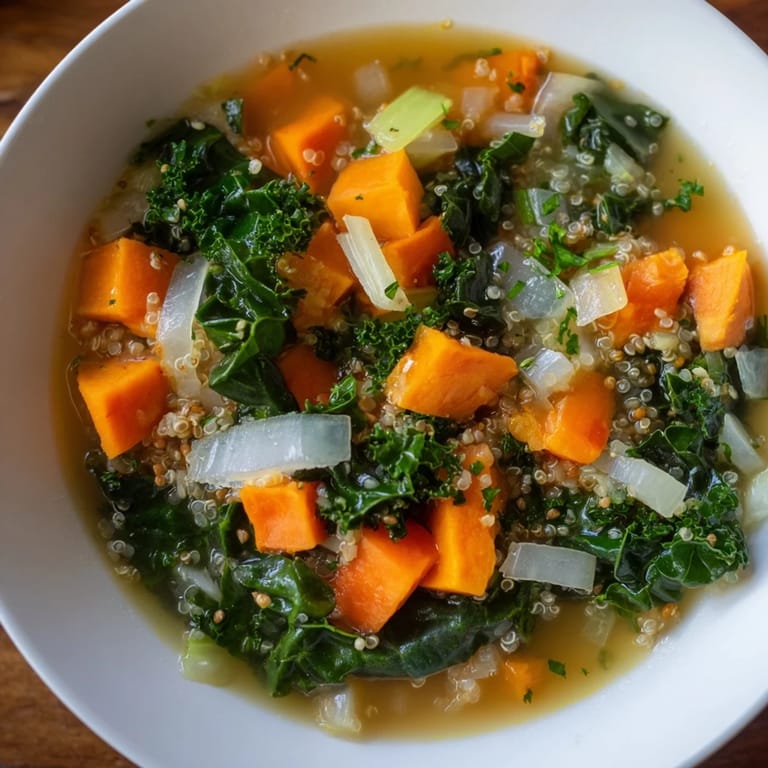
Save I learned one winter that this soup is what I make when I want to feel like I'm taking care of someone—even if that someone is just me on a Tuesday evening. There's something about a homemade bowl of vegetables and broth that says, I noticed what you needed before you asked.
Making It Your Own
This recipe is a framework, not a rule book. If you've got fennel instead of celery, use it. If your farmers market had stunning beets last week, dice them in. The vegetables that end up in your pot should be the ones that made you pause while shopping, the ones that looked alive. One friend adds white beans for extra protein and heartiness; another throws in spinach at the very end so it stays bright and tender. The broth and aromatics stay constant, but everything else is a conversation between you and what's in season.
Pairing and Serving
Serve this with something crusty and whole-grain—sourdough, rye, anything that doesn't apologize for itself. I've eaten it alone at the counter and at tables with six people, and both feel right. A squeeze of fresh lemon juice at the very end matters more than you'd think; it lifts everything and reminds you that brightness and warmth aren't opposites.
Storage and Reheating
This soup keeps beautifully in the refrigerator for up to four days in a covered container, and it actually tastes better the next day once all the flavors have gotten to know each other. Reheat it gently on the stove with a splash of water if it's thickened too much—it should taste like soup, not like stew. Freeze it in portions too; it defrosts without complaint and tastes like a gift to your future self.
- Stored soup thickens as it sits, so add water or broth when reheating to get back to the texture you want.
- If you're freezing it, leave the parsley and lemon juice for after it's thawed and warmed through.
- Make a big batch on Sunday and you've got lunch or dinner taken care of for half the week.
 Save
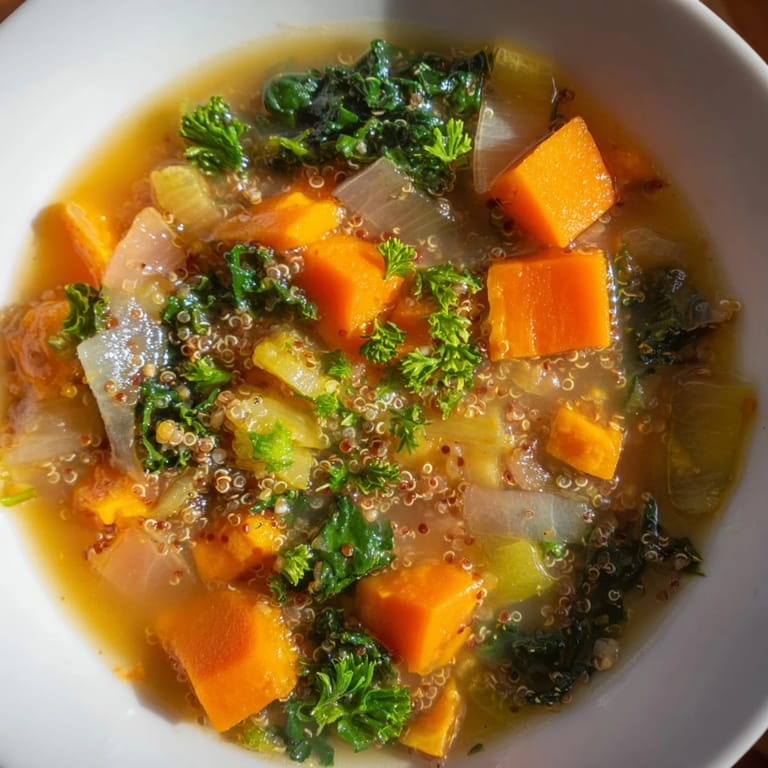
Save There's comfort in knowing that something this nourishing and real comes from your own hands. Make it often, make it with attention, and let it remind you that the simplest meals sometimes mean the most.
Recipe FAQs
- → Can I substitute the quinoa with another grain?
Yes, you can replace quinoa with grains like barley or brown rice, adjusting cooking times accordingly for best texture.
- → What leafy greens work best in this dish?
Kale and Swiss chard are great for their sturdiness, but spinach or collard greens can be used for a milder taste.
- → How do I enhance the flavor of the broth?
Incorporate herbs such as thyme and oregano, and consider a splash of lemon juice at the end to brighten the flavors.
- → Is it possible to add more protein to this dish?
Adding drained chickpeas or white beans boosts protein content while maintaining the hearty texture.
- → Can I prepare this ahead of time?
Yes, the flavors deepen after resting, making it suitable for make-ahead meals stored refrigerated for up to three days.