 Save
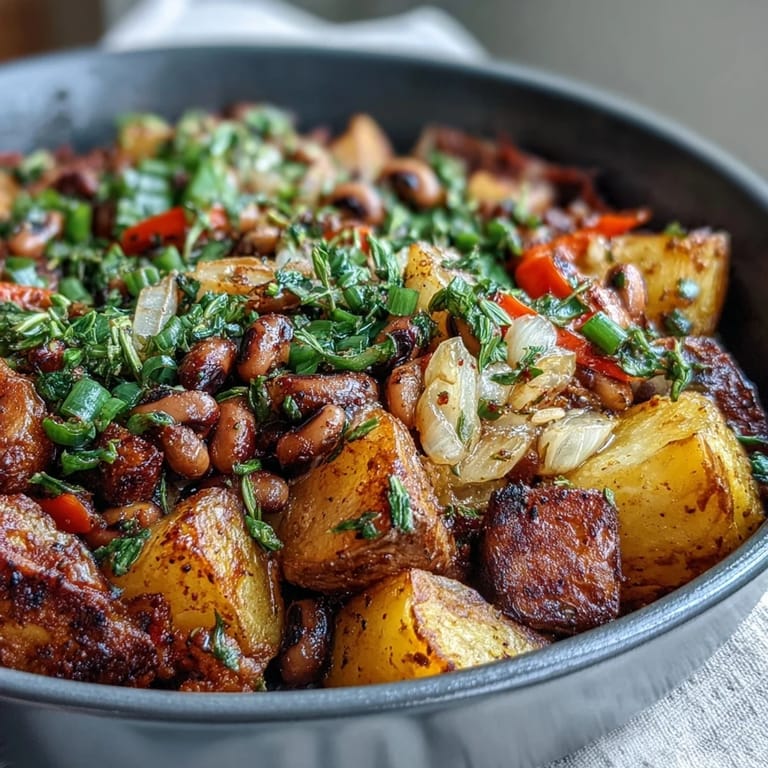
Save There's something about the sound of vegetables hitting a hot baking sheet that signals breakfast is about to get real. I stumbled onto this black-eyed pea hash on a Sunday morning when I had leftover beans and potatoes staring at me from the fridge, and I didn't want another sad scramble. The kitchen filled with the smell of smoked paprika and caramelizing onions, and suddenly my partner wandered in asking what smelled so good. That's when I knew this wasn't just a side dish—it was becoming a regular thing.
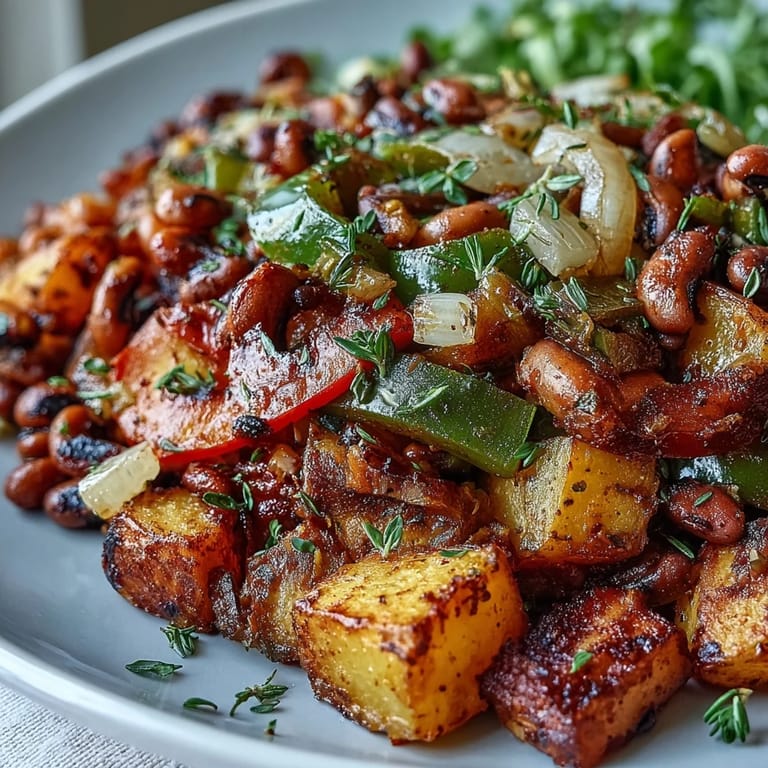
I made this for a group of friends who were staying over during a long weekend, and what started as a simple breakfast side became the thing everyone asked me to remake. Someone even took a photo, which felt ridiculous but also kind of perfect because the colors are genuinely beautiful—those red and green peppers against the golden potatoes. It proved that sometimes the most satisfying meals are the ones that feel effortless to make.
Ingredients
- Black-eyed peas (2 cups cooked): These are your protein anchor, and using canned saves you from overnight soaking—just rinse them well to cut down on any metallic taste.
- Yukon Gold potatoes (2 medium, diced): They hold their shape beautifully when roasted and have a naturally buttery flavor that elevates the whole dish.
- Yellow onion (1 medium, diced): The sweetness deepens as it roasts, creating little caramelized edges that catch on your tongue.
- Red and green bell peppers (1 each, diced): These add brightness and a slight crunch that contrasts with the softer beans and potatoes.
- Garlic (2 cloves, minced): Don't skip this—it becomes almost nutty when roasted and ties everything together.
- Olive oil (2 tablespoons): Use a good quality one you actually like, because it's one of the few fats holding this together.
- Smoked paprika (1 teaspoon): This is the seasoning that makes people ask what you did differently; it adds a subtle depth without overpowering.
- Ground cumin (½ teaspoon): A whisper of earthiness that belongs in Southern food, whether anyone tells you that or not.
- Dried thyme (½ teaspoon): Just enough to make you feel like you know what you're doing in the kitchen.
- Salt and black pepper (½ teaspoon and ¼ teaspoon): Season in layers—some on the potatoes before roasting, the rest mixed in later—so the flavor gets into everything.
- Red pepper flakes (¼ teaspoon, optional): Only if you want people to ask if your eyes are watering in the best way.
- Fresh parsley or green onions (2 tablespoons, chopped): The finishing touch that makes it look intentional rather than thrown together, even though it kind of was.
Tired of Takeout? 🥡
Get 10 meals you can make faster than delivery arrives. Seriously.
One email. No spam. Unsubscribe anytime.
Instructions
- Heat your oven and start the potatoes:
- Crank the oven to 425°F and get a large baking sheet in there. Toss your diced potatoes with a tablespoon of olive oil, half the salt, and half the black pepper, then spread them out in a single layer—don't crowd them or they'll steam instead of roast.
- Let them get golden:
- Roast for 15 minutes while you prep everything else. This head start means the potatoes will have a chance to develop those crispy edges you're after.
- Combine everything in a bowl:
- While those potatoes are working, put your black-eyed peas, diced onion, peppers, minced garlic, remaining olive oil, and all your spices into a large bowl. Toss it together gently so everything gets coated—this is where the seasoning actually reaches the beans.
- Bring it all together on the sheet:
- Pull the potatoes out, dump your bowl onto the baking sheet with them, and toss everything together evenly. It should look colorful and chaotic in the best way.
- Finish roasting:
- Back in the oven for another 15 minutes, stirring once halfway through. You're looking for the potatoes to turn deep golden and the vegetables to soften just enough to be tender but still hold their shape.
- Finish and serve:
- Scatter fresh parsley or green onions over the top while it's still hot, and taste before you plate it up. This is your moment to add more salt or a pinch of heat if something feels off.
 Save
Save There was a morning when my roommate tasted this fresh out of the oven and just closed their eyes for a second, and I realized this wasn't just efficient breakfast—it was the kind of thing that made people feel taken care of. That small moment made me understand why comfort food matters so much.
Why This Works as a Complete Meal
The beauty of this hash is that it doesn't need an egg on top to feel satisfying, though it definitely welcomes one. The black-eyed peas provide real protein and fiber, the potatoes give you substance, and the roasted vegetables add both nutrition and actual flavor rather than just texture. By the time you eat it, everything has cooked together long enough that the flavors have started mingling, but not so long that it all tastes the same.
Customizing to Your Mood
I've made this with sweet potatoes on nights when I wanted something slightly sweeter, and it genuinely transforms without needing any other adjustments. Some mornings I'll add a handful of fresh spinach or kale right at the end, letting the residual heat wilt it just enough. The framework is solid enough that you can play with it—different peppers, extra garlic, a splash of hot sauce mixed in—without losing what makes it work.
Making It Your Own
This is one of those recipes where your instincts matter more than you'd think, especially once you've made it once. After the first time, you'll know how you like your potatoes (crispier or softer), how much seasoning feels right for your palate, and whether you need the heat or not.
- Top it with a fried egg, sliced avocado, or a dollop of Greek yogurt for extra richness.
- Serve alongside fresh salsa, hot sauce, or even a simple lemon squeeze for brightness.
- Store leftovers in the fridge and reheat gently in the oven or on the stovetop—it actually keeps well for a few days.
 Save
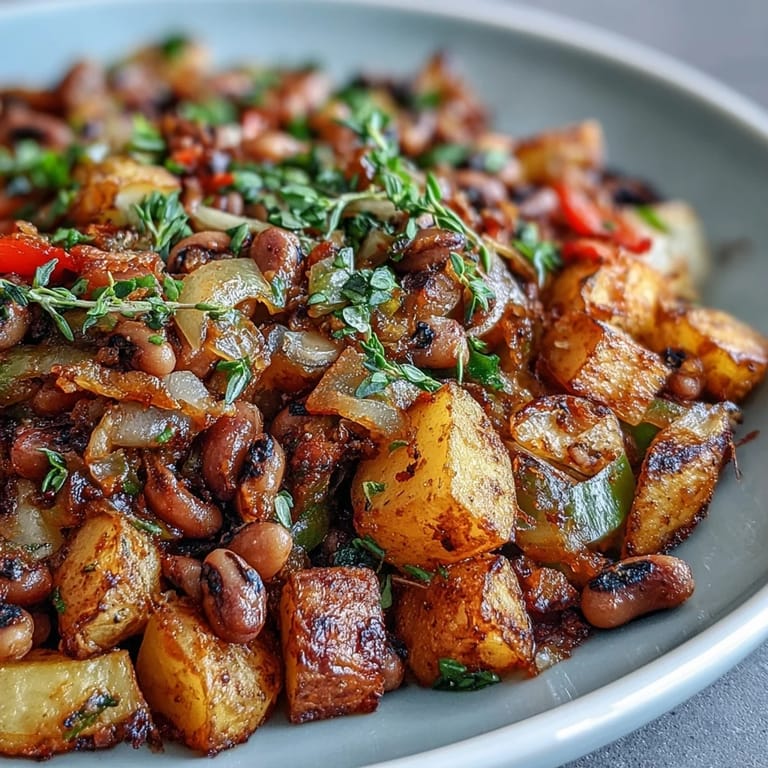
Save This hash became my answer to mornings when I wanted something that felt homemade and intentional without requiring a lot of fuss. It's the kind of recipe that quietly becomes a regular thing, the one you make without thinking because you know exactly how good it is.
Recipe FAQs
- → Can I use dried black-eyed peas instead of canned?
Yes, soak and cook dried black-eyed peas according to package directions until tender before using. Allow them to drain well so they roast properly with the vegetables.
- → What other vegetables work well in this hash?
Sweet potatoes, butternut squash, or even cauliflower make excellent additions. You can also add diced celery, carrots, or jalapeños for extra flavor and crunch.
- → How do I store leftovers?
Store cooled hash in an airtight container in the refrigerator for up to 4 days. Reheat in a skillet over medium heat or in the oven at 350°F until warmed through.
- → Can I make this entirely on the stovetop?
Absolutely. Cook the potatoes in a large skillet with oil over medium-high heat until golden, then add the remaining vegetables and seasonings. Cover and cook until tender, stirring occasionally.
- → What proteins pair well with this hash?
Fried or poached eggs are classic choices. You can also serve alongside bacon, sausage, or grilled chicken. For a vegan protein boost, top with avocado or hemp seeds.
- → Is this dish spicy?
The base hash is mild with just a hint of warmth from black pepper and smoked paprika. The crushed red pepper flakes are optional—add them if you prefer some heat, or omit for a family-friendly version.