 Save
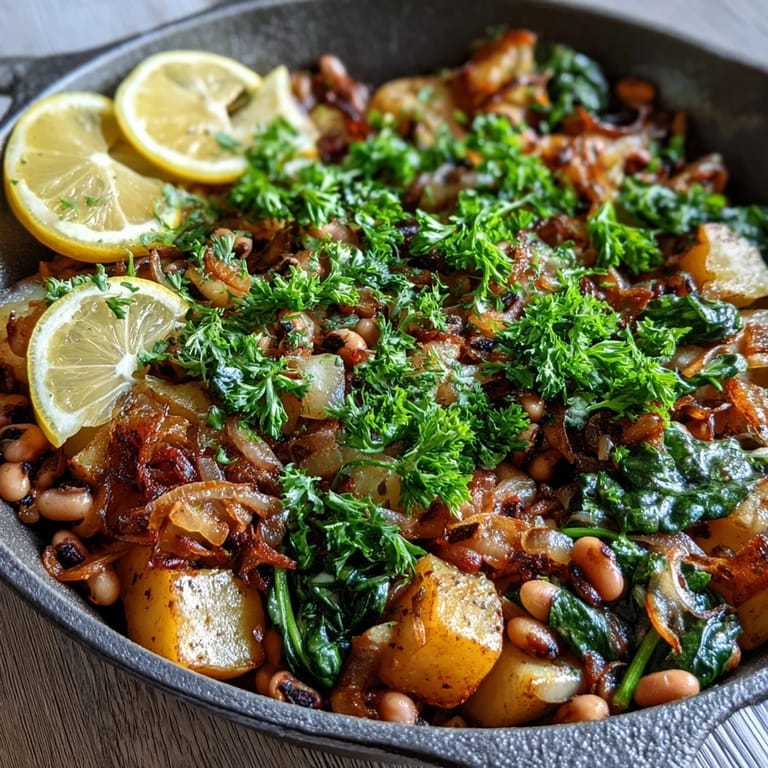
Save There's something about cast iron that makes even the simplest ingredients taste like comfort. My neighbor stopped by on a chilly Thursday evening, and I had just enough vegetables and pantry staples to throw together this black-eyed pea skillet, watching the onions turn golden while she told me about her week. That one meal became her go-to request whenever she'd text asking what I was making for dinner.
I made this for a potluck once and brought it in that same cast iron skillet, keeping it warm on a trivet. People came back for seconds without realizing it was meatless, and that's when I knew this recipe was something special enough to make again and again.
Ingredients
- Olive oil: Two tablespoons is enough to coat your skillet and start building flavor without making the dish heavy.
- Yellow onion: Slice it thin so it softens quickly and almost melts into the dish.
- Yukon Gold potatoes: These waxy potatoes hold their shape better than russets and give you that creamy bite.
- Fresh spinach: Use it roughly chopped so it wilts faster and doesn't become a tangled mess.
- Black-eyed peas: Canned work perfectly fine if you rinse them well, or use leftover cooked ones.
- Garlic: Mince it finely so it distributes evenly and doesn't burn when it hits the hot oil.
- Smoked paprika: This is the secret that gives everything that gentle smokiness without needing meat.
- Dried thyme: Half a teaspoon is gentle enough not to overpower, but strong enough to matter.
- Crushed red pepper flakes: Keep them optional, but add them if you like a whisper of heat.
- Vegetable broth: Low-sodium lets you control the salt level as you taste.
- Fresh parsley: A final sprinkle brightens everything right before serving.
- Lemon wedges: Squeeze one over your bowl for a little zing that wakes up all the flavors.
Tired of Takeout? 🥡
Get 10 meals you can make faster than delivery arrives. Seriously.
One email. No spam. Unsubscribe anytime.
Instructions
- Heat your skillet and start with the onions:
- Pour the olive oil into your cast iron skillet and let it warm over medium heat until it shimmers slightly. Add your sliced onion and let it soften for about three to four minutes, stirring occasionally until it turns translucent and starts to smell sweet.
- Add the potatoes and let them get golden:
- Stir in your diced potatoes and cook for ten to twelve minutes, stirring every couple of minutes so they brown on the edges and become just tender. You're looking for a little color on them, not a full softness yet.
- Build the flavor with spices:
- Once the potatoes are starting to look good, add your minced garlic, smoked paprika, thyme, and red pepper flakes if using. Stir constantly for about one minute so everything gets fragrant and the spices coat the vegetables.
- Simmer with broth and beans:
- Pour in the vegetable broth and add your black-eyed peas, stirring well so everything combines. Cover your skillet and let it simmer for eight to ten minutes until the potatoes are completely tender and most of the liquid has been absorbed.
- Wilt the spinach and finish:
- Uncover the skillet, add your chopped spinach, and stir gently for two to three minutes until it's wilted down and dark green. Taste everything and adjust your salt and pepper until it feels right to you.
- Serve while it's warm:
- Sprinkle fresh parsley over the top if you have it, and serve directly from the skillet with lemon wedges on the side for squeezing.
 Save
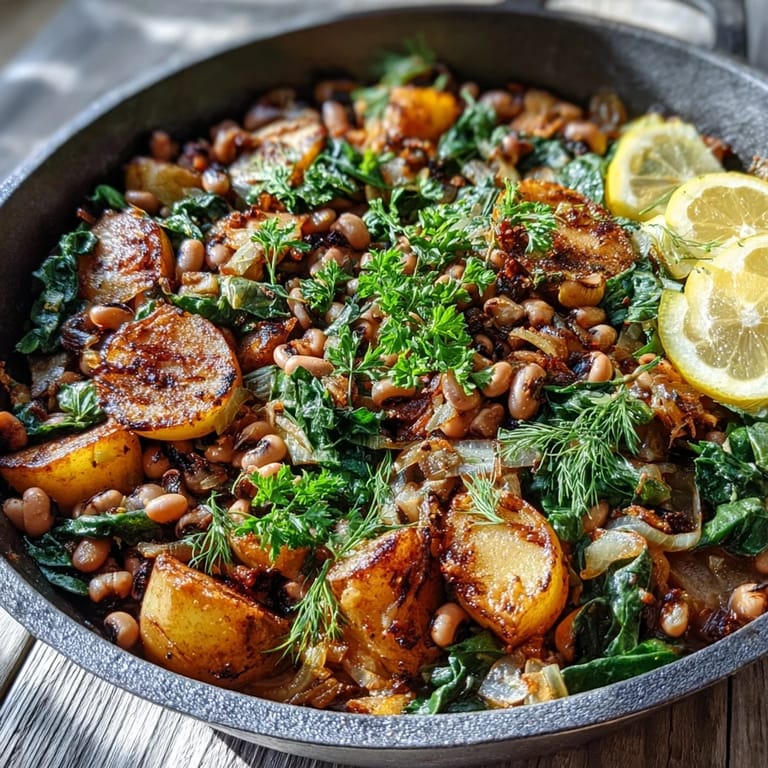
Save My daughter sat at the kitchen counter watching this come together, and by the time I spooned it into bowls, she was already reaching for the lemon wedges. Food doesn't always have to be complicated to feel special.
Why Cast Iron Matters Here
Cast iron heats evenly and holds that heat, which means your potatoes get those little golden spots instead of cooking unevenly. Plus, there's something about serving straight from the skillet that makes people feel like they're getting something real and handmade, even if the whole thing took less than an hour.
Making It Your Own
This recipe is flexible enough to work with what you have on hand. Kale works just as well as spinach, and if you want more substance, stir in some cooked rice or serve it alongside cornbread so everyone can make their meal as hearty as they want.
Storage and Serving Ideas
Leftovers keep in the refrigerator for three days and taste even better the next day when the flavors have time to settle together. Reheat gently in a skillet with a splash of water, or eat it cold if you're in a hurry and want something different.
- Serve with crusty bread to soak up any remaining broth.
- Top with a fried egg if you want to make breakfast out of the leftovers.
- Add extra greens or roasted vegetables if you want to stretch it further.
 Save
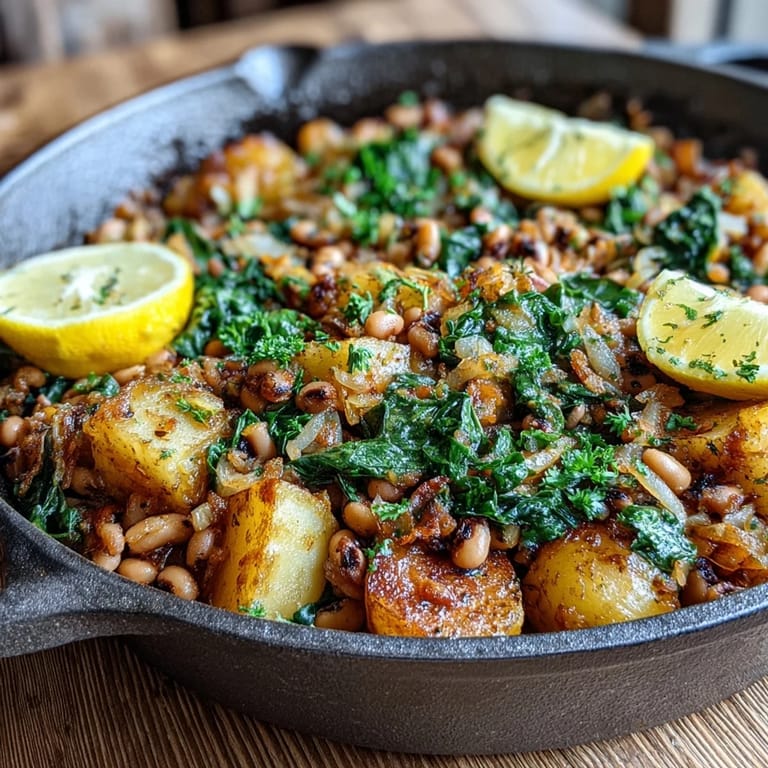
Save This is the kind of dinner that sneaks into your regular rotation without you planning it, becoming one of those meals you reach for when you want something nourishing but don't want to spend all evening cooking. Keep the ingredients on hand and you'll always have dinner ready.
Recipe FAQs
- → Can I use dried black-eyed peas instead of canned?
Yes, soak dried black-eyed peas overnight and cook them until tender before adding to the skillet. You'll need about 1 cup dried peas to yield 2 cups cooked. Plan for extra prep time if using dried.
- → What other greens work well in this skillet?
Kale, Swiss chard, or collard greens make excellent substitutes for spinach. Just note that heartier greens like kale may need 2-3 additional minutes to wilt completely. Remove tough stems before chopping.
- → How do I store and reheat leftovers?
Store cooled leftovers in an airtight container in the refrigerator for up to 4 days. Reheat in a skillet over medium heat with a splash of broth or water, or microwave in 30-second intervals until warmed through.
- → Can I make this dish vegan?
This skillet is naturally vegan as written. For extra protein, try adding sautéed tempeh cubes or firm tofu along with the potatoes. The flavor profile works beautifully with plant-based ingredients.
- → What should I serve with this skillet dinner?
Cornbread is a classic pairing that soaks up the flavorful juices. Rice, quinoa, or crusty bread also work well. For a lighter meal, serve with a simple green salad dressed with vinaigrette.
- → How can I add more protein to this dish?
Consider adding sautéed tempeh, tofu cubes, or plant-based sausage along with the potatoes. Shredded chicken or cooked bacon also work if you're not vegetarian. A sprinkle of hemp seeds or nutritional yeast at the end adds plant protein too.