 Save
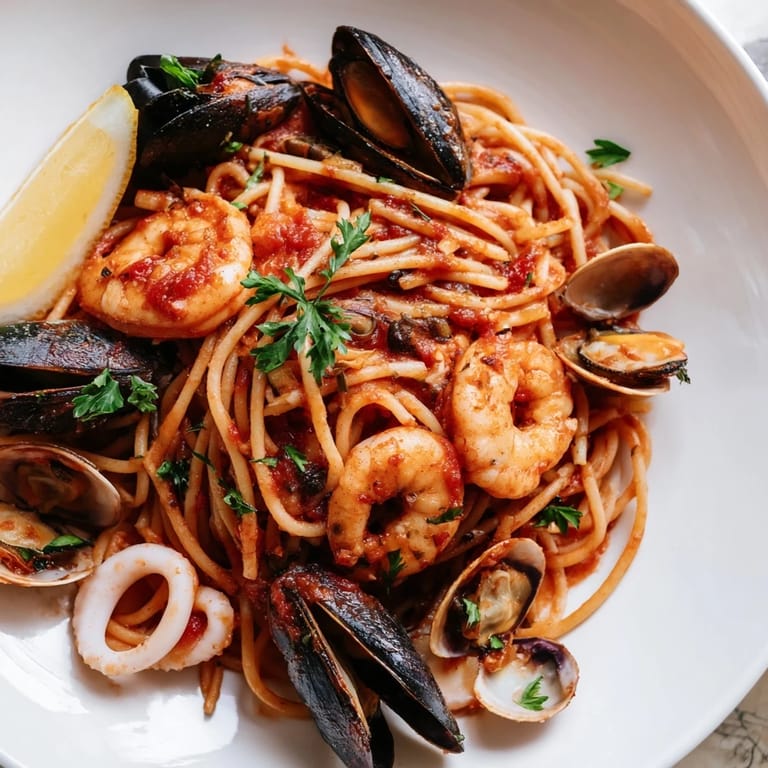
Save There's something magical about the moment when fresh seafood hits a simmering tomato sauce and the kitchen fills with that briny, garlicky steam. I discovered this dish on a spontaneous Tuesday evening when I had shrimp and mussels left over from a market visit and a sudden craving for something that felt both elegant and comforting. The combination came together almost by accident, but it's become the recipe I reach for whenever I want to feel like I'm cooking something special without spending hours in the kitchen.
I made this for my sister who'd just moved to the city and kept saying she missed restaurant meals. Watching her face light up when she realized the whole thing took under an hour, and tasted better than the seafood place down the block, felt like vindication. She's made it at least a dozen times since, and it's become her go-to dinner when she wants to feel grounded.
Ingredients
- Large shrimp (200g / 7 oz): Buy them peeled and deveined if possible—it saves time and they cook so quickly that any extra work just stresses you out unnecessarily.
- Mussels (200g / 7 oz): The open-and-discard rule matters here; mussels that don't open after cooking are bad news, so trust your instinct and leave them out.
- Squid rings (150g / 5 oz): They tenderize fast if you cook them briefly or slow down if you cook them too long, so timing is everything with squid.
- Sea scallops (150g / 5 oz): Pat them dry before cooking or they'll steam instead of sear, which changes the whole texture of the dish.
- Spaghetti or linguine (350g / 12 oz): Thinner pasta drinks in the sauce better than thick; reserve your pasta water like it's liquid gold because it's what makes everything silky.
- Olive oil (2 tbsp): Use good oil here since it flavors the base, but don't waste your expensive stuff on cooking.
- Onion (1 small, finely chopped): The sweetness from the onion balances the acidity of the tomatoes in a way garlic alone can't do.
- Garlic cloves (3, minced): Don't skip the mincing—chunks will overpower the sauce and won't dissolve into the magic.
- Red pepper flakes (1/2 tsp optional): I leave these out most nights, but when I add them, the heat cuts through the richness perfectly.
- Canned crushed tomatoes (800g / 28 oz): Crushed tomatoes are the right move here—they break down faster than whole canned tomatoes and create a smoother sauce.
- Tomato paste (2 tbsp): This deepens the flavor in a way that feels almost mysterious until you taste it.
- Dry white wine (100ml / 1/3 cup + 1 tbsp): The acidity cuts through the richness and adds a brightness that's essential; skip the wine and you'll taste something missing.
- Dried oregano (1 tsp): Fresh basil is lovely, but dried oregano is what makes this taste authentically Italian.
- Dried basil (1 tsp): Basil in a marinara is non-negotiable, even though I usually prefer it fresh elsewhere.
- Sugar (1/2 tsp): A tiny pinch balances the acidity without making anything taste sweet, trust this even if you're skeptical.
- Sea salt and black pepper: Taste as you go because the seafood releases salt into the sauce as it cooks.
- Fresh parsley (2 tbsp chopped): The garnish isn't decoration—it's the final bright note that makes you realize why this dish matters.
- Lemon wedges: Serve them alongside because the squeeze of lemon at the end is where the whole dish comes alive.
Tired of Takeout? 🥡
Get 10 meals you can make faster than delivery arrives. Seriously.
One email. No spam. Unsubscribe anytime.
Instructions
- Get your water going:
- Salt your pasta water generously so it tastes like the sea, then let it come to a rolling boil—this is the foundation that sets the tone for everything else.
- Build the sauce base:
- Heat olive oil over medium heat and let the onion soften until it's nearly transparent, about 2–3 minutes. Add garlic and red pepper flakes, cooking just until fragrant so the garlic doesn't turn bitter.
- Introduce the wine:
- Pour in white wine and let it simmer for 2 minutes, watching it reduce slightly as the alcohol cooks off and leaves behind a subtle depth.
- Build the body:
- Stir in crushed tomatoes, tomato paste, oregano, basil, sugar, salt, and pepper all at once, then let the whole thing simmer uncovered for 10 minutes while you cook the pasta. The sauce will smell increasingly incredible as it mellows.
- Time the seafood perfectly:
- Start with squid and scallops, giving them 2 minutes of a gentle simmer. Then add shrimp and mussels, cover the pan, and cook for 3–4 minutes until the shrimp turn pink and the mussels have cracked open—any that refuse to open should be discarded.
- Bring it together:
- Add drained pasta directly to the sauce and toss gently, loosening everything with reserved pasta water if needed. The starch from the pasta water will help the sauce coat each strand.
- Taste and finish:
- Adjust seasoning one final time, then serve immediately while everything is hot, with a generous handful of fresh parsley and lemon wedges on the side.
 Save
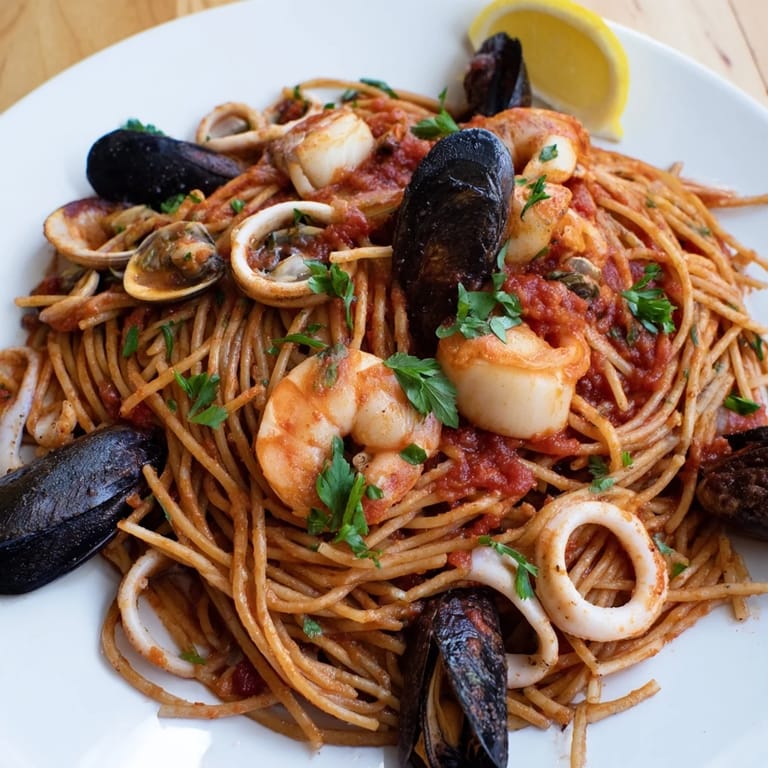
Save My favorite memory of this dish isn't actually about cooking it perfectly—it's about the night I slightly overcooked the shrimp and didn't realize until halfway through plating. My partner took a bite anyway and said it was still the best thing I'd made all month, which somehow made it taste better than the times I nailed everything. That's when I realized this recipe works because the flavors are so good that even small mistakes don't matter much.
Why Seafood and Tomato Were Always Meant to Be Together
The partnership between fresh seafood and tomato sauce isn't accidental—it's one of those cooking combinations that just works because the acidity of the tomato cuts through the richness of the seafood while the briny flavors from the ocean complement the earthiness of the herbs. When you add garlic and white wine to the equation, you're not creating something complicated; you're just letting these ingredients do what they naturally want to do together. The fact that it comes together in under 45 minutes feels like a gift.
Pasta Water Is Your Secret Weapon
I used to drain my pasta and throw the water away without thinking, until someone mentioned that the starch in that water is what makes restaurant sauces cling to pasta so perfectly. Now I reserve at least half a cup every single time, and it's transformed how my sauces behave. That cloudy liquid is essentially edible glue that makes the sauce coat every strand instead of pooling at the bottom of the bowl, so don't skip this step even if it seems small.
Making This Dish Your Own
The beauty of this recipe is that it's sturdy enough to handle substitutions without falling apart. I've made it with clams when shrimp weren't available, swapped in fresh white fish when I was low on mussels, and once used a combination of whatever seafood was on sale. The structure stays the same, and the results are always good. If you want extra depth, a splash of seafood stock instead of some of the white wine changes the flavor in subtle but noticeable ways.
- Pair this with a crisp Italian white wine like Pinot Grigio, which echoes the white wine in the sauce and makes the whole meal feel cohesive.
- If gluten is a concern, swap regular pasta for a good gluten-free version and the dish doesn't lose anything.
- Finish with a squeeze of fresh lemon right before eating—it's the final flourish that transforms everything from good to unforgettable.
 Save
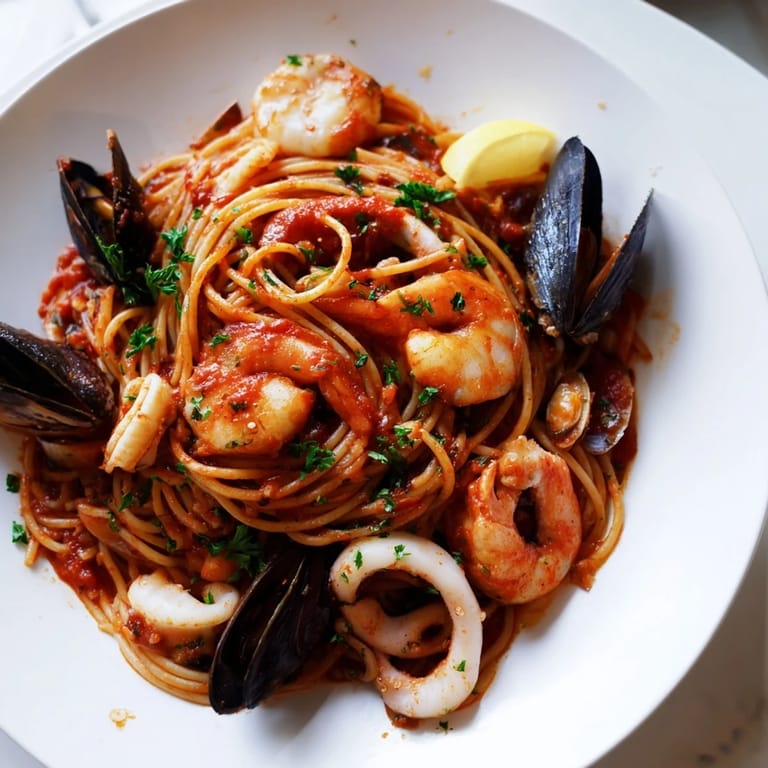
Save This is the recipe I make when I want to feel capable in the kitchen without spending my whole evening cooking. It's taught me that good food doesn't require complicated techniques—just fresh ingredients, good timing, and a willingness to trust your instincts about when something is done.
Recipe FAQs
- → What types of seafood work best in this dish?
A combination of shrimp, mussels, squid rings, and scallops works well, providing varied textures and flavors.
- → Can I use different pasta types?
Spaghetti or linguine are ideal to catch the sauce well, but other long, thin pasta can be used if preferred.
- → How can I adjust the sauce seasoning?
Adjust salt, pepper, and red pepper flakes to taste. Adding a splash of seafood stock can boost depth.
- → What is the best way to cook the seafood evenly?
Simmer squid and scallops first, then add shrimp and mussels, cooking just until shrimp turn pink and mussels open.
- → How do I keep the pasta sauce from drying out?
Reserve some pasta cooking water and add it gradually to loosen the sauce while tossing pasta in.
- → What herbs complement the marinara sauce?
Dried oregano and basil are classic choices enhancing the tomato sauce’s rich flavor.