 Save
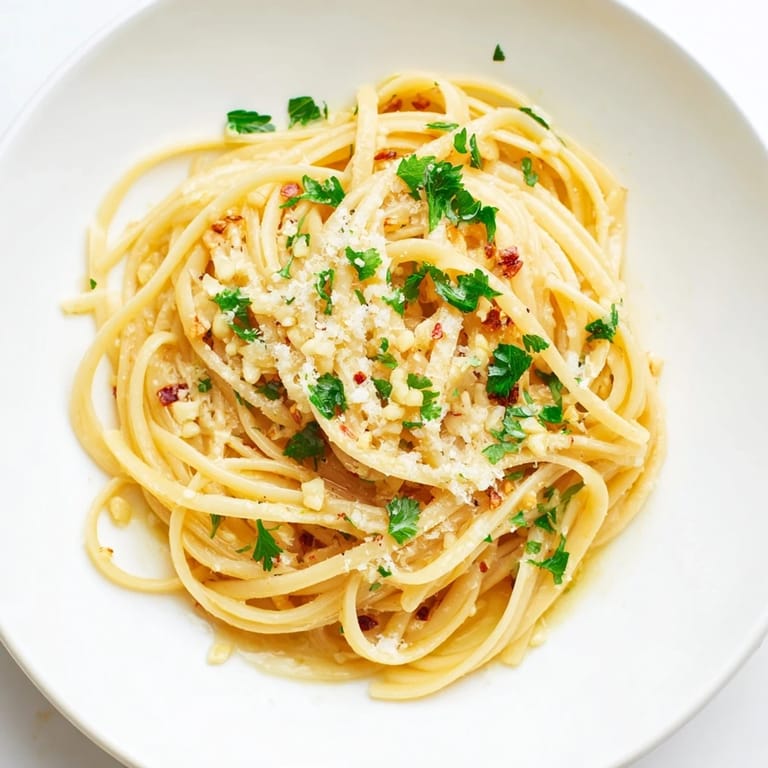
Save There's something almost meditative about the way garlic transforms in hot butter—one moment it's just pale slivers, the next it's turned golden and fragrant enough to fill your entire kitchen. I discovered this dish on a Tuesday night when I had nothing in the pantry except pasta, butter, and a bulb of garlic that had been sitting there longer than I'd like to admit. What started as pure necessity became my go-to recipe for those evenings when I wanted something that tasted restaurant-quality but required barely any effort.
I made this for my neighbor once when she was overwhelmed with moving boxes, and watching her face light up at how simple and delicious it was reminded me that sometimes the best gifts are the ones that don't require fussing. She texted me the recipe request before she'd even finished eating, which felt like the highest compliment I could ask for.
Ingredients
- Linguine (400 g / 14 oz): Don't skip the al dente part—slightly firm pasta will absorb the sauce without turning mushy.
- Unsalted butter (80 g / 6 tbsp): The foundation of everything here; quality butter makes a real difference since there's nowhere for mediocre ingredients to hide.
- Garlic cloves (6 large, finely minced): Mincing by hand gives you better control than the food processor, which can release too much garlic oil and turn it bitter.
- Crushed red pepper flakes (1/4 tsp, optional): A whisper of heat that makes people ask what your secret ingredient is.
- Lemon zest (from 1 lemon, optional): The brightness that lifts everything and prevents the dish from feeling heavy.
- Sea salt (1/2 tsp) and black pepper (1/4 tsp): Season gently at first; you can always add more but you can't take it back.
- Fresh flat-leaf parsley (30 g / 1/2 cup, finely chopped): The last-minute addition that makes it look like you actually tried.
- Parmesan cheese (40 g / 1/2 cup, freshly grated, optional): Freshly grated always outperforms the pre-grated version.
- Lemon wedges: Serve alongside so people can adjust the brightness to their taste.
Tired of Takeout? 🥡
Get 10 meals you can make faster than delivery arrives. Seriously.
One email. No spam. Unsubscribe anytime.
Instructions
- Boil the pasta:
- Fill a large pot with water, salt it generously like the sea, and bring it to a rolling boil before adding linguine. Set a timer and don't wander off—al dente means tender with a slight resistance when you bite it, not crunchy, not soft. Before draining, scoop out about half a cup of that starchy pasta water and set it aside like liquid gold, because it's what makes the sauce silky instead of separated.
- Melt and infuse the butter:
- In your skillet, let the butter melt slowly over medium heat until it's foaming and smells nutty. Add your minced garlic and listen for that gentle sizzle; you want to cook it just until fragrant and pale gold, about 1–2 minutes, because the moment it starts to brown you've gone too far. If you're using red pepper flakes or lemon zest, stir them in now and let them warm through for a few seconds.
- Combine pasta with sauce:
- Add your hot drained linguine directly to the skillet and toss it gently through the garlic butter, making sure every strand gets coated. Pour in a splash of that reserved pasta water—the starch clings to the butter and creates a silky, glossy coating—and keep tossing until it looks creamy and gorgeous.
- Season and finish:
- Taste as you go, adjusting salt and pepper until it sings. Stir in the chopped parsley and half the Parmesan if using, toss everything together, and serve it immediately while it's still warm and glossy.
 Save
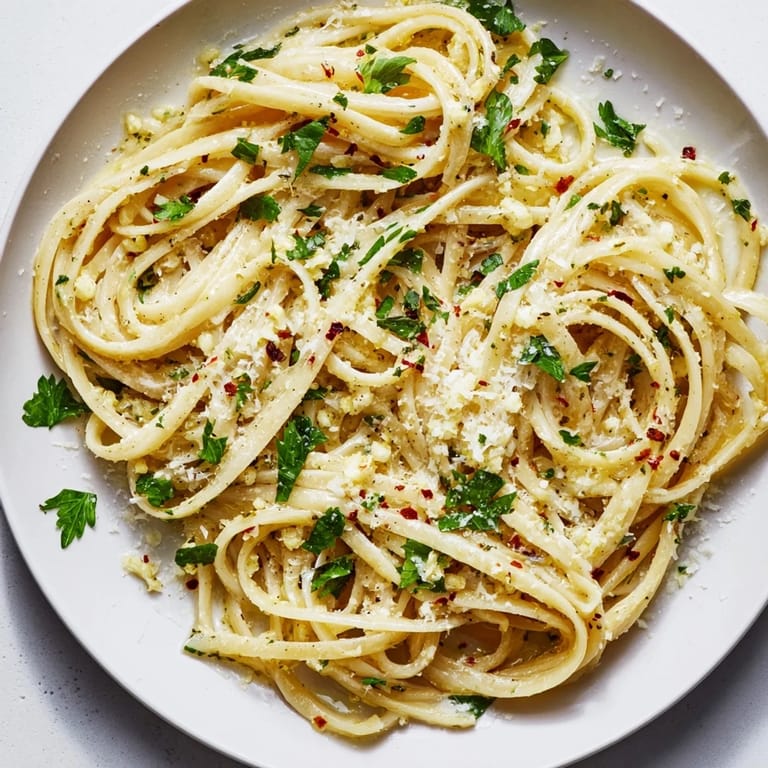
Save There was an evening when my sister arrived unannounced after a long day at work, looking completely frayed, and I had this on the table within twenty minutes. She sat at my kitchen counter with a glass of wine and told me it tasted like comfort, and I realized that sometimes the simplest meals carry the most weight.
The Garlic Trick Nobody Tells You
The difference between garlic that's golden and fragrant versus garlic that's burnt and bitter comes down to about thirty seconds and your attention span. Watch it constantly—you should see it just barely starting to turn from white to pale straw-colored before you move on to the next step. I learned this the hard way by getting distracted and ending up with a pan of dark, acrid garlic that I couldn't salvage, which taught me that in cooking, sometimes slow and steady really does win.
Why This Tastes Like a Restaurant Dish at Home
The secret isn't some exotic technique or hard-to-find ingredient—it's the starchy pasta water that creates an emulsion, which is just a fancy way of saying it helps the butter cling to the linguine instead of pooling at the bottom. Restaurants rely on this same trick because it's reliable and it works, and once you understand why it works, you'll use it in a hundred different dishes. The other part of the magic is the quality of your butter and the freshness of your garlic; when you're only using a few ingredients, there's nowhere for them to hide.
Making It Your Own
This recipe is a canvas, not a prison—treat it as a starting point and build from there based on what you have or what sounds good that night. I've made it with a handful of sautéed mushrooms thrown in, with fresh spinach wilted into the warm pasta, and once with crispy pancetta that I'd set aside to crumble on top at the end. The proportions stay the same, but your creativity is what makes it feel personal to your kitchen.
- A generous squeeze of fresh lemon juice right at the end brightens everything without making it taste obviously citrusy.
- Red pepper flakes aren't just for heat—they add a subtle complexity that makes people wonder what spice you used.
- If you can't find flat-leaf parsley, regular curly parsley works fine, though flat-leaf has a cleaner, slightly less metallic flavor.
 Save
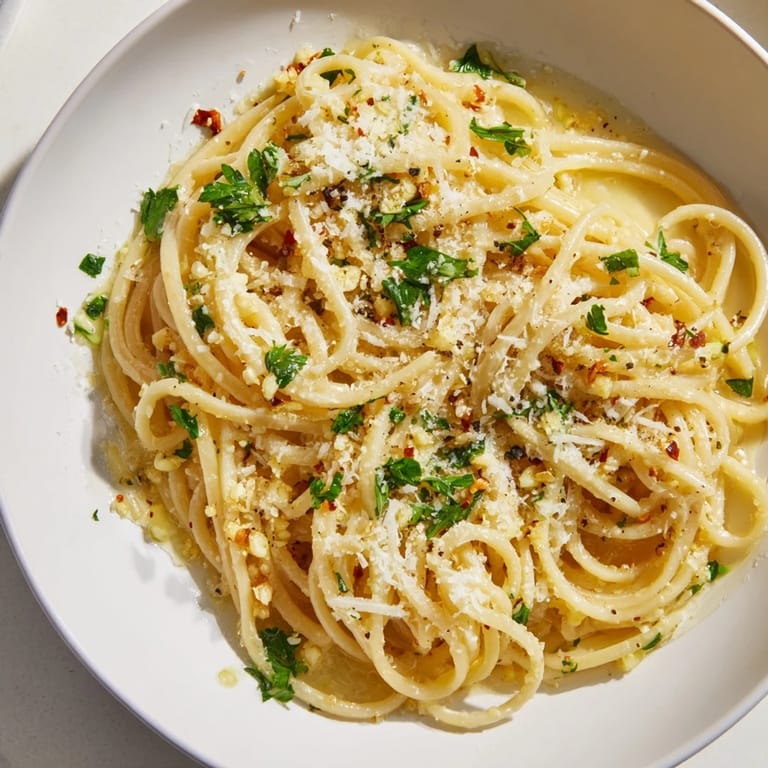
Save This dish has taught me that dinner doesn't need to be complicated to be memorable—sometimes the best meals are the ones that come together quickly, taste like you spent hours in the kitchen, and leave people asking for the recipe. Make it often, adjust it fearlessly, and don't apologize for its simplicity.
Recipe FAQs
- → How do I prevent the garlic from burning?
Sauté garlic over medium heat and stir frequently for 1–2 minutes until fragrant but not browned to avoid bitterness.
- → Can I add other ingredients to this dish?
Yes, sautéed mushrooms, spinach, or cooked shrimp can enhance flavor and texture.
- → What is the purpose of reserved pasta water?
Adding reserved pasta water helps bind the garlic butter sauce to the linguine, creating a smooth coating.
- → Is Parmesan cheese necessary?
It’s optional but adds a savory depth; omit for a dairy-free version or substitute as preferred.
- → How can I make this dish gluten-free?
Use gluten-free linguine to accommodate gluten-free diets without compromising texture.