 Save
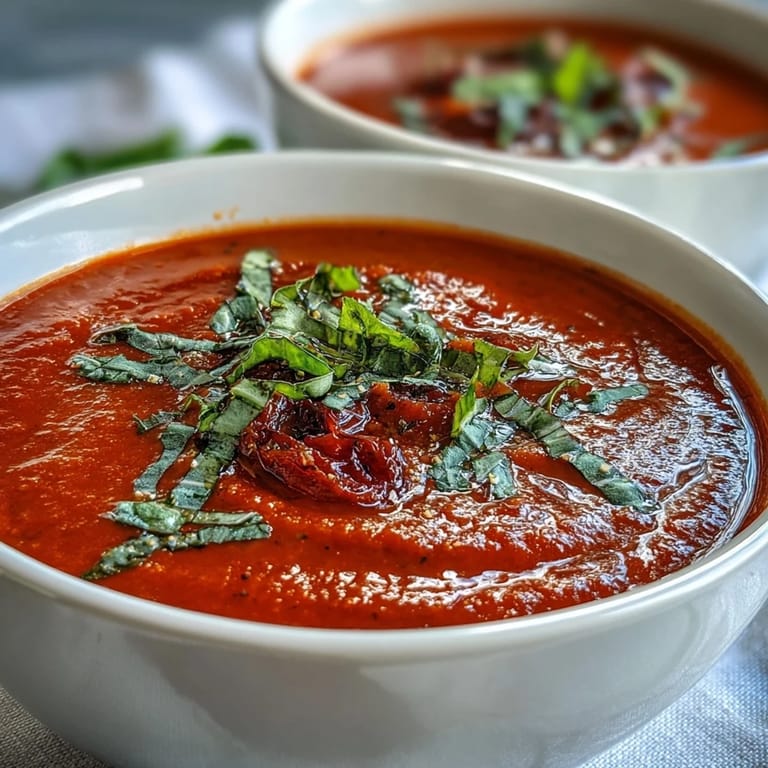
Save The September I planted too many tomatoes became the autumn I discovered my love for homemade roasted tomato soup. Standing in my garden, overwhelmed by the bounty of ripe tomatoes weighing down their vines, I faced a delicious dilemma. When my neighbor suggested roasting them for soup, I was skeptical but desperate. The transformation that happened in my oven that afternoon - the way those ordinary tomatoes caramelized into something extraordinary - changed how I think about comfort food forever.
Last winter, when my sister was recovering from surgery, I delivered a thermos of this soup to her doorstep with a small loaf of crusty bread. Through the window, I watched her face light up as she took the first spoonful, steam rising between us like a shared secret. She called me later that evening to say it was the first thing that actually tasted good to her in weeks. Sometimes the most powerful medicine isnt medicine at all.
Ingredients
- Ripe Tomatoes: Look for tomatoes that yield slightly to pressure and smell fragrant at the stem end - the deeper red and more aromatic, the sweeter your soup will be.
- Yellow Onion: The sweetness of a properly roasted yellow onion provides the backbone that makes this soup feel substantial rather than watery.
- Garlic Cloves: Roasting transforms garlic from sharp and pungent to mellow and nutty, infusing the soup with depth without overwhelming.
- Fresh Basil: Always add this toward the end of cooking to preserve its bright, aromatic oils that would otherwise dissipate with extended heat.
- Vegetable Broth: I prefer low-sodium varieties so I can control the salt level myself and adjust to the natural sweetness of the roasted vegetables.
Tired of Takeout? 🥡
Get 10 meals you can make faster than delivery arrives. Seriously.
One email. No spam. Unsubscribe anytime.
Instructions
- Prep Your Vegetables:
- Slice those tomatoes in half, exposing their juicy interiors to the heat that will transform them. Quartering the onions gives them just the right size to caramelize at the same rate as your tomatoes.
- Create Your Roasting Canvas:
- Spread everything on a parchment-lined baking sheet, giving each piece a bit of personal space to allow steam to escape and caramelization to happen. The drizzle of olive oil should be generous enough to coat but not pool.
- Roast to Perfection:
- At 220°C (425°F), your kitchen will start to fill with an aroma that might draw neighbors to your door. Look for those beautiful charred edges on the tomatoes that signal concentrated flavor.
- Build Your Flavor Base:
- When transferring everything to your pot, use a spatula to scrape every bit of caramelized goodness from the baking sheet. Those dark bits are pure flavor waiting to be dissolved.
- Basil Infusion:
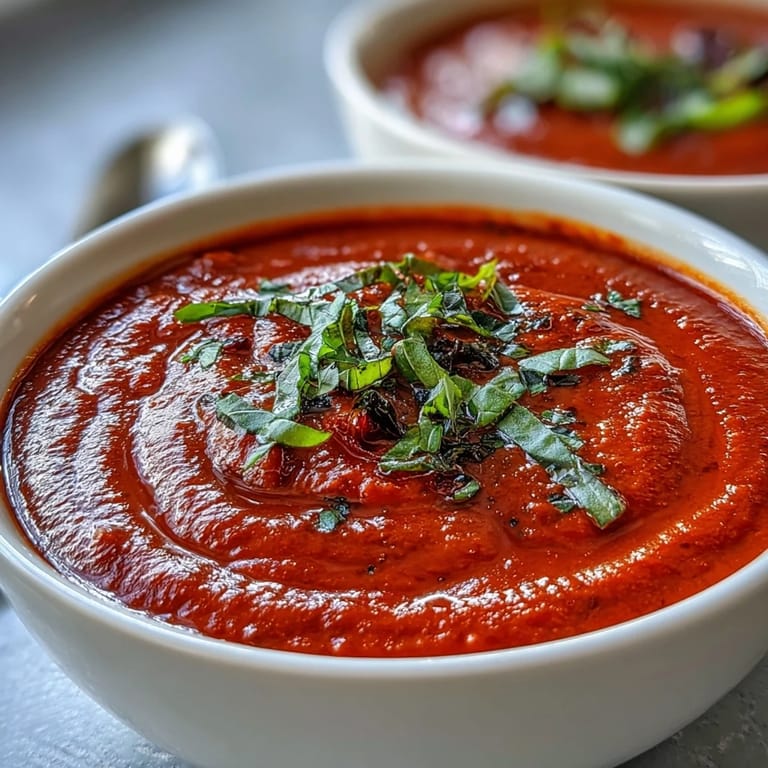
- As you stir in the fresh basil, watch the bright green leaves wilt and release their oils into the soup. This moment of transformation is worth pausing to appreciate.
- Blend to Your Desired Texture:
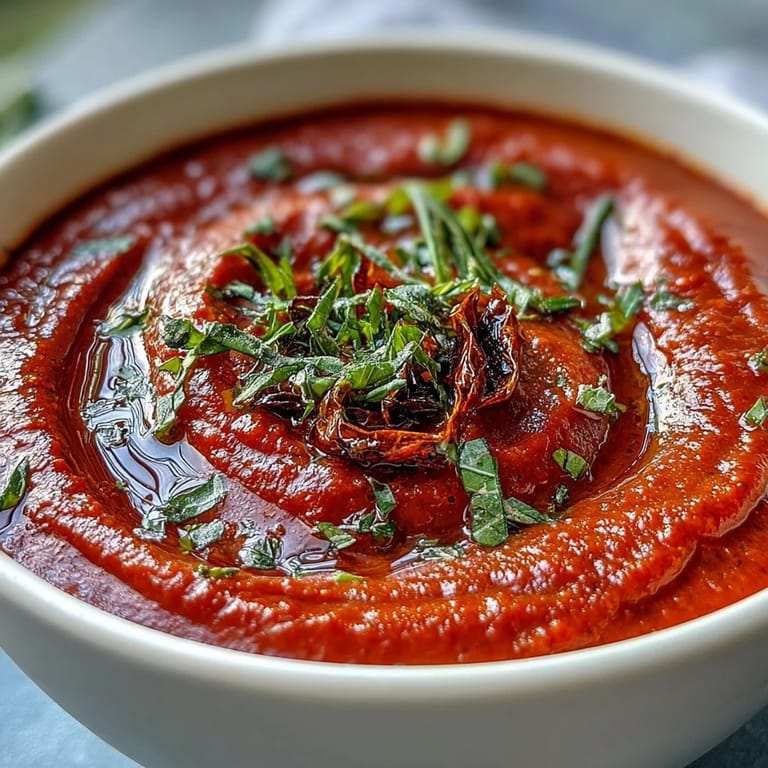
- The immersion blender lets you control the final consistency - I prefer leaving some texture rather than aiming for perfectly smooth. Start slow to avoid hot splashes.
- Final Touches:
- A taste before serving might reveal the need for a pinch more salt or perhaps that optional sugar to balance acidity. Trust your palate to guide these final adjustments.
 Save
Save  Save
Save The first time I served this soup at a dinner party, a friend who claimed to hate tomato soup had seconds, then sheepishly asked for the recipe. We were sitting around my dining table with candles flickering, the conversation had lulled, and I watched as everyone took their first spoonful simultaneously. The collective sigh that followed made me realize food doesnt just nourish bodies - sometimes it creates a moment of perfect communion between friends who, for just a few seconds, are experiencing exactly the same pleasure.
Seasonal Adaptations
In high summer when tomatoes are at their peak, I often skip the sugar entirely and sometimes add a ripe red bell pepper to the roasting pan for natural sweetness. During winter months when good fresh tomatoes are scarce, I substitute with high-quality canned San Marzano tomatoes drained of their juices before roasting - theyll never match fresh, but the roasting still works magic on them. The soup shifts with the seasons in my kitchen, each version holding a place in my cooking calendar.
Making It A Complete Meal
This soup transitions effortlessly from elegant first course to satisfying main dish with a few thoughtful additions. A swirl of pesto instead of plain basil leaves adds complexity, while a grilled cheese sandwich made with sharp cheddar and sourdough bread transforms it into the ultimate comfort food pairing. For summer evenings, I serve it chilled with a dollop of crème fraîche and diced cucumber for a refreshing take that surprises guests who only know tomato soup as a hot dish.
Storage And Reheating
The flavor of this soup actually improves after a day in the refrigerator, making it perfect for meal prep or make-ahead dinner parties. When freezing portions, I leave out the cream and add it fresh upon reheating for the best texture and flavor preservation.
- Refrigerate in an airtight container for up to 4 days, allowing the flavors to meld and deepen.
- Freeze in individual portions using silicone molds, then transfer frozen blocks to freezer bags for up to 3 months of summer-in-winter happiness.
- Reheat gently over medium-low heat rather than bringing to a rolling boil, which can cause the texture to break and flavors to dull.
 Save
Save 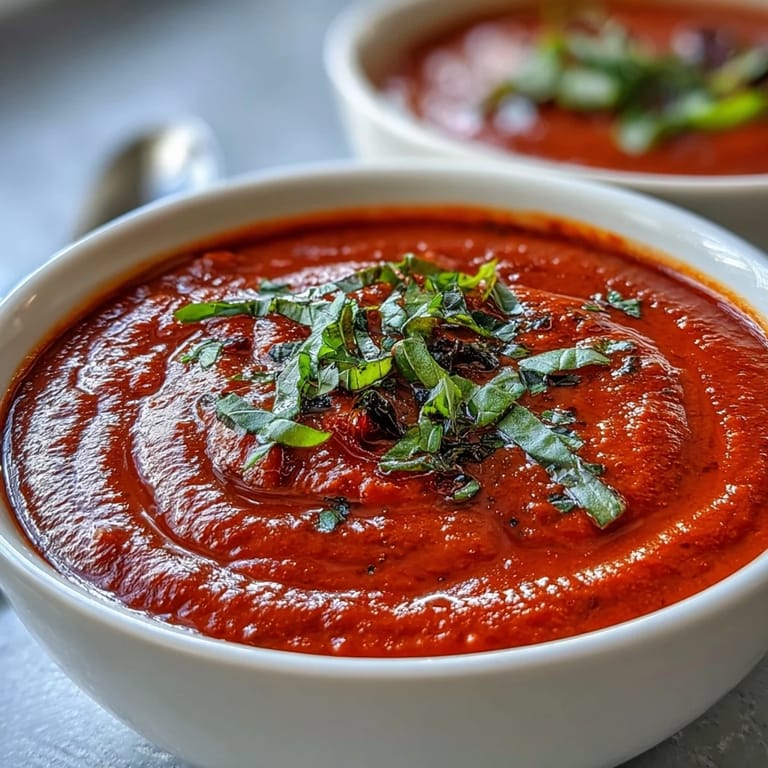 Save
Save This roasted tomato basil soup has taught me that sometimes the simplest ingredients, treated with patience and care, create the most memorable meals. Each spoonful carries not just flavor, but the story of a garden, a season, and the people who gather around your table.
Recipe FAQs
- → How do I achieve the silkiest texture?
Use an immersion blender directly in the pot for the smoothest results. For extra refinement, pass the blended mixture through a fine sieve to remove any remaining fibers or bits of skin.
- → Can I use canned tomatoes instead of fresh?
While fresh tomatoes yield the best flavor, you can substitute with high-quality canned whole tomatoes. Drain them first and roast briefly to develop caramelization before proceeding with the method.
- → How long will this keep in the refrigerator?
Store in an airtight container for up to 4 days. The flavors often improve after a day as the ingredients meld together. Reheat gently over low heat, adding a splash of broth if needed.
- → What's the best way to freeze this?
Cool completely before transferring to freezer-safe containers, leaving space for expansion. Freeze for up to 3 months. Thaw overnight in the refrigerator and reheat slowly, whisking to restore consistency.
- → How can I adjust the acidity level?
If tomatoes are too acidic, add the optional sugar to balance flavors. A splash of cream also helps mellow sharp notes. Conversely, a squeeze of lemon juice brightens the bowl if tomatoes lack brightness.
- → What wine pairs well with this?
A crisp Sauvignon Blanc or rustic Italian white wine complements the roasted flavors beautifully. The wine's acidity cuts through the richness while enhancing the herbal basil notes.