 Save
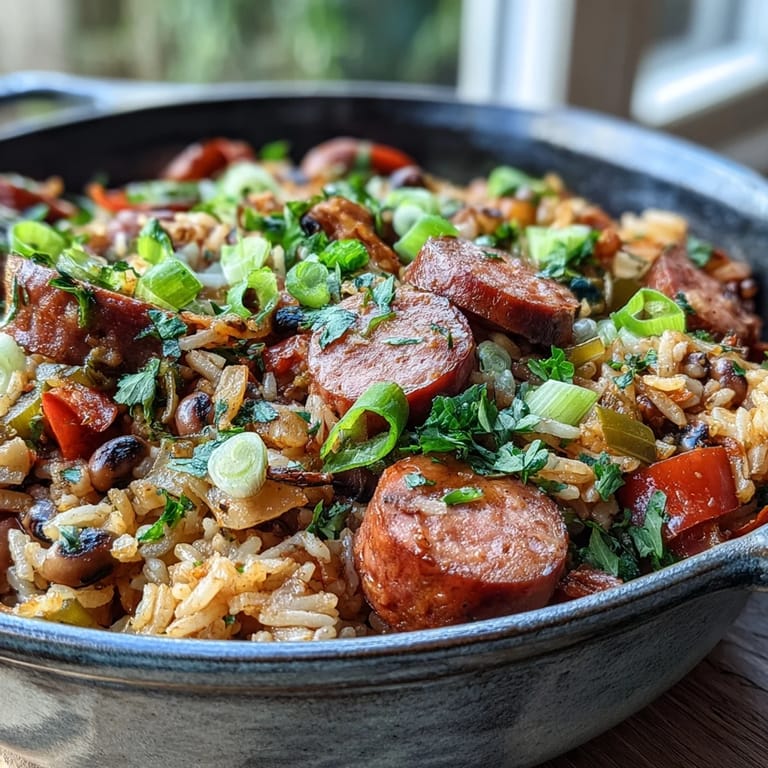
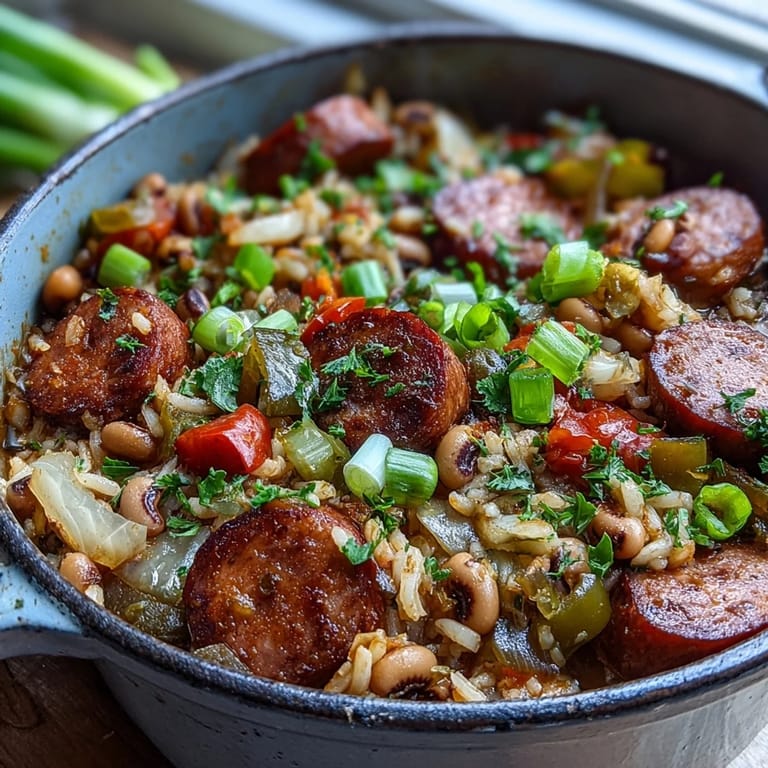
Save My neighbor Marcus showed up one Saturday morning with a pot of something that smelled like New Orleans had relocated to my kitchen—earthy, smoky, alive with spices I couldn't quite name. He'd learned to make jambalaya from his grandmother, he explained, and this version with black-eyed peas had become his go-to when he wanted something that felt both comforting and adventurous. I watched him work that day, and what struck me wasn't just how good it tasted, but how straightforward it was—one pot, bold flavors, done in under an hour.
I made this for a small dinner party on a rainy Tuesday, and something magical happened—everyone slowed down, actually tasted their food, and asked for seconds before they'd finished their first bowl. There's something about jambalaya that brings people together; maybe it's the warmth, or the way each bite tastes slightly different from the last.
Ingredients
- Smoked sausage (340 g/12 oz, Andouille or kielbasa, sliced): This is your flavor anchor; the smokiness carries through the whole dish and browns beautifully in the initial sear.
- Onion, celery, and bell peppers (1 medium onion diced, 2 celery stalks diced, 1 red and 1 green bell pepper diced): This is the holy trinity of Cajun cooking, and together they build a flavor foundation that tastes more complex than the sum of their parts.
- Garlic (3 cloves, minced): Add this after the vegetables soften so it doesn't burn and turn bitter.
- Black-eyed peas (1 can, 425 g/15 oz, drained and rinsed): These beans absorb the spice flavors while staying tender; they're what makes this version feel authentic and grounding.
- Long-grain white rice (300 g/1 ½ cups): Choose rice that hasn't been rinsed, as the starch helps absorb the liquid and spices evenly.
- Chicken broth (800 ml/3 ⅓ cups, low-sodium): Low-sodium gives you control over the final salt level and lets the spices shine without getting muddy.
- Diced tomatoes with juices (1 can, 400 g/14 oz): The acidity brightens everything and creates a subtle sauce that coats each grain.
- Olive oil (2 tbsp): This is your cooking medium for building flavor, not just preventing sticking.
- Cajun seasoning (1 ½ tsp): This is the workhorse spice blend; taste as you go because brands vary in intensity.
- Smoked paprika (1 tsp): It adds color and a subtle depth that regular paprika can't match.
- Dried thyme and oregano (½ tsp each): These herbs tie the whole flavor profile together with earthy, slightly peppery notes.
- Bay leaf (1): This infuses the liquid subtly; don't skip it, but do remember to fish it out before serving.
- Salt, black pepper, and cayenne (½ tsp salt, ¼ tsp black pepper, ¼ tsp cayenne optional): Layer these at the end so you can taste and adjust to your preference.
- Spring onions and fresh parsley (2 spring onions sliced, 2 tbsp parsley chopped): These are your final flourish—they add brightness and a little texture contrast after everything's been simmering.
Tired of Takeout? 🥡
Get 10 meals you can make faster than delivery arrives. Seriously.
One email. No spam. Unsubscribe anytime.
Instructions
- Brown the sausage first:
- Heat your olive oil in a large Dutch oven or heavy pot over medium heat until it shimmers slightly, then add the sausage slices and let them sit undisturbed for a minute or two so they develop a golden crust. This step takes about 4 to 5 minutes total and creates the smoky foundation everything else builds on.
- Build the flavor base:
- Add your diced onion, celery, and bell peppers to the pot with the sausage, stirring occasionally until the vegetables soften and the onion becomes translucent—about 5 minutes. You'll notice the pot starting to smell incredible at this point; that's how you know it's working.
- Wake up the garlic:
- Stir in your minced garlic and cook for just 1 minute, stirring constantly so it releases its aroma but doesn't scorch. One minute is all you need here; longer and it becomes bitter.
- Toast the rice:
- Add your dry rice to the pot and stir it around for about a minute, coating each grain with the oil and vegetable mixture. This toasting step helps the rice stay individual and fluffy rather than clumping.
- Bring everything together:
- Pour in your chicken broth, canned tomatoes with their juice, and the drained black-eyed peas, then add all your spices—Cajun seasoning, smoked paprika, thyme, oregano, bay leaf, salt, pepper, and cayenne if you're using it. Stir well so the spices distribute evenly and nothing settles at the bottom.
- Simmer until the rice is tender:
- Bring the mixture to a boil, then reduce the heat to low, cover the pot, and let it simmer gently for 20 to 25 minutes until the rice is tender and has absorbed most of the liquid. Resist the urge to peek constantly; every time you lift the lid, steam escapes and you extend the cooking time.
- Rest and fluff:
- Remove the pot from heat and let it sit, still covered, for 5 minutes—this allows any remaining liquid to absorb and the flavors to settle. Then discard the bay leaf and fluff everything gently with a fork.
- Finish with green and brightness:
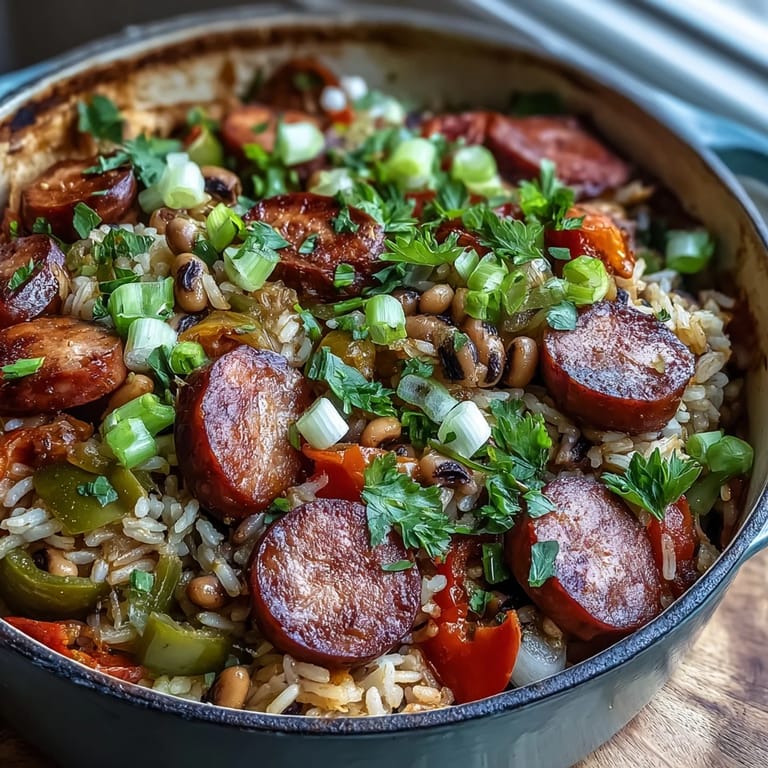
- Scatter sliced spring onions and fresh parsley over the top just before serving, which adds a little freshness and color contrast to all that rich, spiced warmth.
 Save
Save I learned something watching my neighbor cook that Saturday: jambalaya is one of those dishes where the cooking itself is part of the pleasure—the sounds of the sausage sizzling, the way the kitchen fills with warmth and aroma, the moment when you realize you've created something that tastes like home, even if it's not actually your home.
The Magic of Building Layers
Every step in this recipe adds something specific to the final flavor: the sausage brings smoke and salt, the vegetables add sweetness and body, the spices tie everything together, and the tomatoes brighten it all up with acidity. If you rush through these steps or skip the browning stage, you're missing the chance to build something genuinely complex from simple ingredients. The pot teaches you this if you pay attention to it.
Making It Your Own
The beauty of jambalaya is that it's flexible without being fussy—you can swap in different vegetables if that's what you have, use kielbasa instead of Andouille, or add a diced tomato to the garnish if you want more freshness. I've made versions with extra celery when that's what was in my crisper drawer, and added mushrooms for earthiness on other occasions. The structure stays the same; the soul of the dish is in the technique, not in strict adherence to every ingredient.
Serving and Storage Wisdom
Jambalaya is one of those rare dishes that tastes just as good—maybe even better—the next day, when the flavors have settled and deepened. Leftovers store beautifully in the refrigerator for three to four days, and you can reheat gently on the stovetop with a splash of water if it's absorbed too much moisture. It also freezes well for up to a month, though the texture of the rice softens slightly, so you might want to reserve the spring onion and parsley garnish until you're ready to eat.
- Serve with hot sauce on the side so people can add as much heat as they like.
- A simple green salad cuts through the richness beautifully if you want something alongside.
- Cornbread isn't traditional, but it's a wonderful addition if you're feeding a crowd.
 Save
Save This is the kind of dish that makes people linger at the table, that makes you want to cook it again soon and share it with someone new. It asks for your attention for an hour and rewards you with something that tastes like it took all day.
Recipe FAQs
- → What makes this dish authentic Cajun?
The holy trinity of onions, celery, and bell peppers forms the flavor foundation, while Cajun seasoning, smoked paprika, and bay leaf provide the distinctive regional taste. The one-pot cooking method and use of Andouille sausage are traditional techniques.
- → Can I make this vegetarian?
Yes, simply omit the smoked sausage and substitute vegetable broth for chicken broth. Add extra vegetables like mushrooms or additional black-eyed peas to maintain heartiness and protein content.
- → How spicy is this jambalaya?
The heat level is moderate and adjustable. Cajun seasoning provides gentle warmth, while optional cayenne pepper adds extra kick. Serve with hot sauce on the side so diners can customize their preferred spice level.
- → What type of rice works best?
Long-grain white rice is ideal because it stays fluffy and separate during cooking. Avoid short-grain or Arborio rice, which becomes too sticky. Basmati can be substituted for long-grain if needed.
- → How should I store leftovers?
Store cooled jambalaya in an airtight container in the refrigerator for up to 4 days. Reheat gently on the stovetop with a splash of broth or water to restore moisture. The flavors often deepen and improve after a day.
- → Can I use dried black-eyed peas instead of canned?
Yes, but you'll need to cook them first. Soak dried peas overnight, then simmer until tender before adding to the jambalaya. This will extend the total cooking time significantly.