 Save
Save I discovered this recipe at two in the morning, scrolling through my phone after a dinner party where someone mentioned craving birria tacos. Something clicked—what if I threw that spiced, tender beef into a ramen bowl instead? The next weekend, I stood in my kitchen with dried chilies toasting in a skillet, filling the air with smoke and fragrance, and realized I'd stumbled onto something that felt both familiar and wildly new. That first bowl was messy, ambitious, and absolutely worth the three-hour wait.
My partner came home one evening while the beef was still simmering and just stood there breathing in the cinnamon and chipotle cloud hanging over the stove. Three hours later, watching them slurp noodles with their eyes closed, I knew this recipe had become part of our regular rotation. Sometimes the best meals are the ones that make people forget to talk.
Ingredients
- Beef chuck roast (2 lbs): This cut has enough marbling to become impossibly tender after hours of simmering—avoid leaner cuts or you'll end up with something tough.
- Dried guajillo and ancho chilies: These are your flavor foundation; toast them dry first to wake up their sweetness and depth.
- Chipotle in adobo: Just one gives you that smoky heat without drowning out the other spices.
- Garlic and white onion: These blend into the sauce and create a backbone for everything else.
- Spices (cumin, cinnamon, cloves): The cinnamon and cloves might seem strange in a savory dish, but they're what make this fusion feel complete.
- Ramen noodles: Use fresh if you can; instant works but needs draining to avoid mushiness.
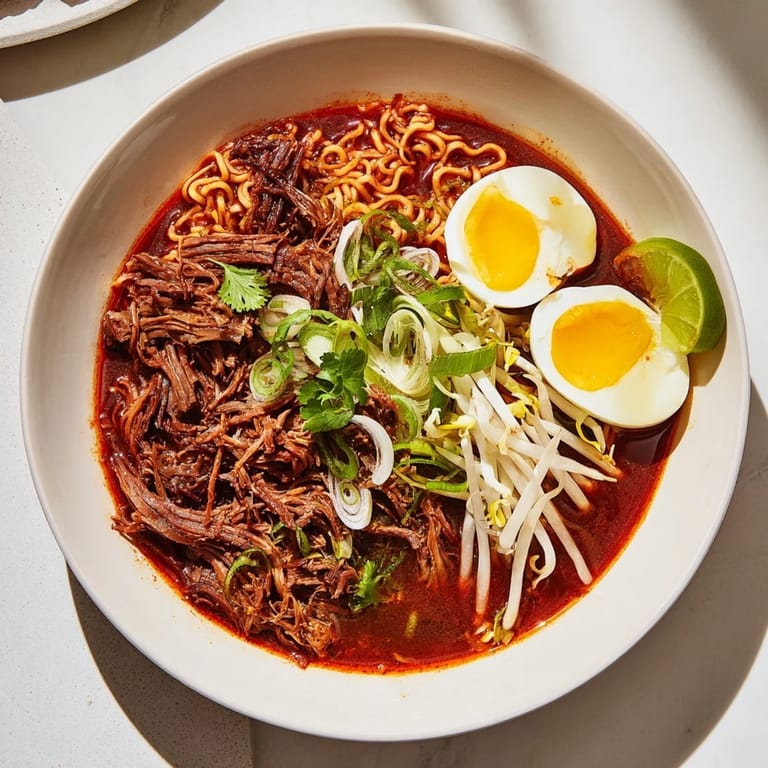
- Soft-boiled eggs: The creamy yolk enriches each slurp of broth—cook them exactly six minutes for that perfect jammy center.
- Fresh toppings (scallions, cilantro, sprouts): These aren't just garnish; they cut through the richness and add necessary brightness.
Tired of Takeout? 🥡
Get 10 meals you can make faster than delivery arrives. Seriously.
One email. No spam. Unsubscribe anytime.
Instructions
- Toast and soak your chilies:
- Dry toast the guajillo and ancho chilies in a skillet until they become fragrant and a shade darker—this takes just a minute or two, so watch them closely. Soak them in hot water for ten minutes until they're soft enough to blend smoothly.
- Blend the sauce base:
- Combine your soaked chilies, chipotle, onion, garlic, tomatoes, and spices in a blender until completely smooth. This is where your flavor lives.
- Sear the beef:
- Season large chunks of chuck roast and brown them hard in a hot Dutch oven—don't rush this step, as those crusty edges matter. Work in batches if needed so you don't crowd the pot.
- Simmer low and slow:
- Add your blended sauce, beef broth, and bay leaves to the pot with the browned beef. Cover and let it bubble gently for two and a half to three hours, until the meat shreds with just a fork.
- Prepare the combined broth:
- Strain the birria cooking liquid, then combine it with chicken broth, soy sauce, and sesame oil in a separate pot. This hybrid broth is where Mexican and Japanese flavors finally shake hands.
- Cook noodles and assemble:
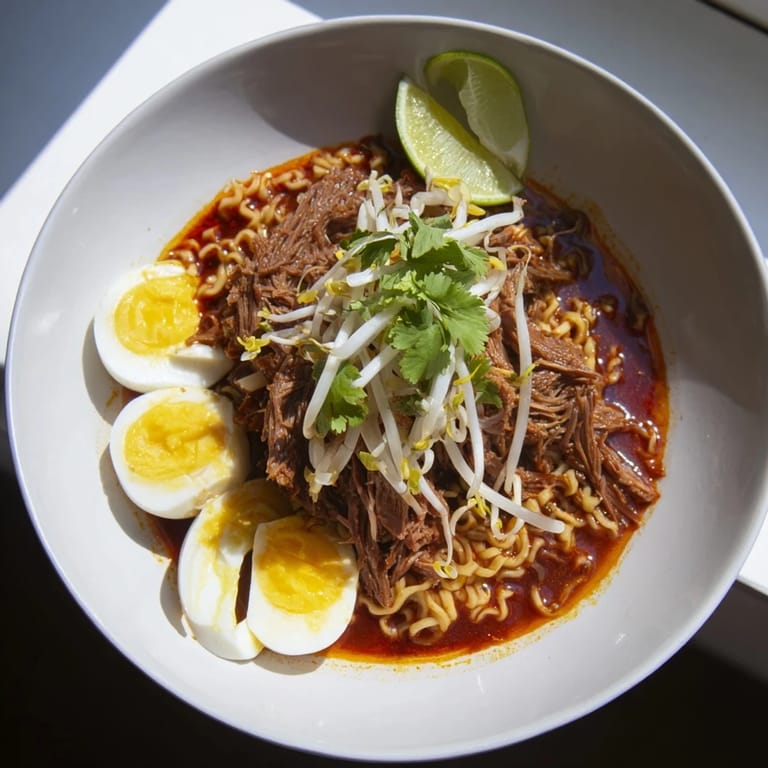
- Boil your ramen until just tender, drain it, and divide among bowls. Ladle the hot broth over the noodles, top with shredded beef, and then let people build their own bowl with eggs, sprouts, cilantro, and whatever else calls to them.
 Save
Save The first time I served this to my family was chaotic in the best way—everyone customizing their bowls, reaching for lime, adding jalapeños, debating whether they needed more cilantro. It stopped being just dinner and became this interactive, joyful moment where the food invited conversation.
The Fusion Magic
What makes this recipe work is the respect it pays to both traditions. The Mexican birria gives you soul and spice, while the ramen noodles and Japanese aromatics bring refinement and texture. Neither one overpowers the other—they're more like dance partners who've been waiting for the right song. The sesame oil is subtle, the soy sauce hides in the background, but together with the cilantro and lime, they brighten what could otherwise feel too heavy.
Building Layers of Flavor
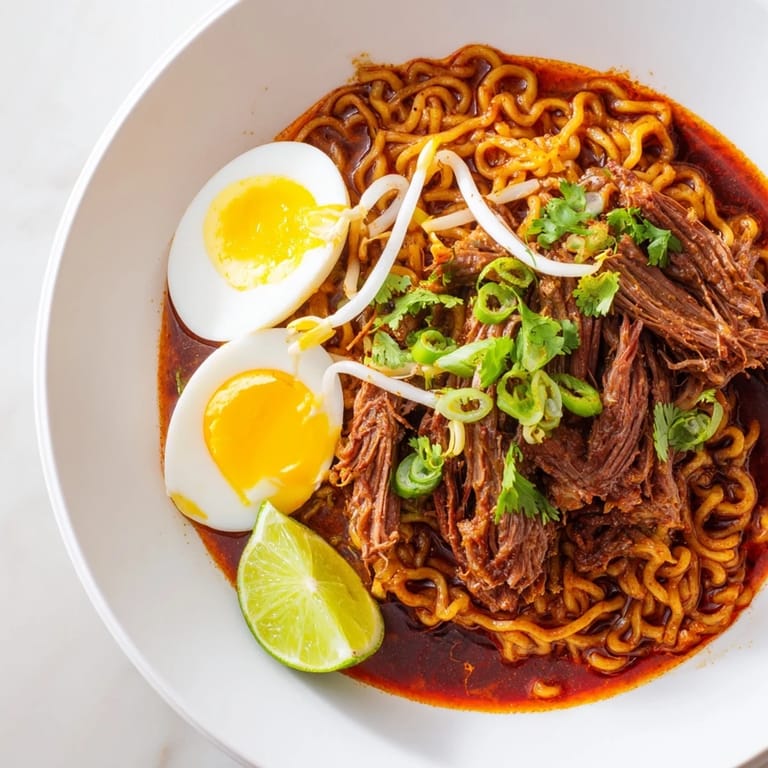
Every component in this bowl serves a purpose. The soft-boiled egg breaks open and adds creaminess, the bean sprouts provide crunch and freshness, the scallions bring a sharp green note, and the cilantro and lime juice cut through the richness of the beef and broth. This isn't random—it's intentional balance. When you taste each component individually and then taste them all together, you'll understand why each one matters.
Making It Your Own
This recipe loves flexibility. Some days I crisp extra beef in a skillet for a textural contrast, other times I add a splash of chili oil for people who want more heat. You can substitute chicken for beef if you want something lighter, or use gluten-free ramen and tamari if that's what your kitchen needs. The framework stays solid; the details bend to what you're craving.
- If the broth tastes too thick after cooking, thin it with a bit of water or additional broth.
- Prepare the beef a day ahead—it reheats beautifully and the flavors only deepen overnight.
- Keep all your toppings prepped and at the table so people can customize without you hovering.
 Save
Save This is the kind of recipe that stays with you, the one you return to on cold nights or when you want to impress someone. It asks for time but gives back generosity in every spoonful.
Recipe FAQs
- → How long should the beef simmer for tenderness?
Simmer the beef over low heat for about 2.5 to 3 hours until it becomes very tender and shreds easily.
- → Can I use different noodles for this dish?
Yes, fresh or instant ramen noodles work well; just avoid seasoning packets if using instant for best control over flavor.
- → What toppings complement the flavors best?
Soft-boiled eggs, scallions, bean sprouts, fresh cilantro, lime wedges, jalapeños, toasted sesame seeds, and chili oil enhance both texture and flavor balances.
- → Is it possible to make a lighter version?
Substituting chicken for beef produces a lighter, yet still flavorful, alternative without sacrificing the broth’s richness.
- → How can I achieve a gluten-free version?
Use gluten-free ramen noodles and soy sauce alternatives that suit a gluten-sensitive diet.