 Save
Save There's something about the smell of onions turning golden that stops me mid-conversation every single time. Years ago, I was helping my neighbor prepare for a dinner party, and while she fussed over the main course, I found myself completely mesmerized by a pan of caramelizing onions on her stove—how they transformed from sharp and pungent to something almost sweet and silky. That night, watching her layer them with crispy potatoes and melted Gruyère, I realized this wasn't just a side dish; it was the dish everyone remembered. Now I make it whenever I want to feel that same magic in my own kitchen.
I made this for the first time on a rainy Sunday when I had exactly two hours and four people coming over, which is precisely when you discover you don't have time for complicated sides. The beauty of this dish hit me halfway through: while the onions did their slow, patient work on the stove, the potatoes got golden in the oven without needing my attention, and everything came together in one baking dish like a small miracle.
Ingredients
- Yukon Gold potatoes: These are mandatory—their waxy texture holds shape during roasting while their buttery flavor soaks up the caramelized onion essence, unlike starchy varieties that turn mealy.
- Olive oil for potatoes: Use a generous hand here; it's what turns the edges crispy and golden, and those crispy edges are what makes people ask for the recipe.
- Yellow onions: Not red, not white—yellow onions have the sweetness that emerges during caramelization, and they're forgiving if your timing isn't perfect.
- Butter and olive oil for onions: The butter gives them richness while olive oil prevents burning; this combination is the difference between caramelized and scorched.
- Sugar and thyme: Just a pinch of sugar helps the caramelization happen faster without making anything taste sweet, while thyme adds an earthy depth that ties everything to French cuisine.
- Gruyère cheese: It melts into silky strings and adds a nutty complexity that Swiss or Emmental can't quite replicate, though either works if that's what you have.
Tired of Takeout? 🥡
Get 10 meals you can make faster than delivery arrives. Seriously.
One email. No spam. Unsubscribe anytime.
Instructions
- Prep your potatoes:
- Scrub them well under cold water—you want the skin intact for texture and nutrients. Slice them into even ½-inch rounds so they cook uniformly; if some are thicker, they'll still be raw when others are golden.
- Get them golden:
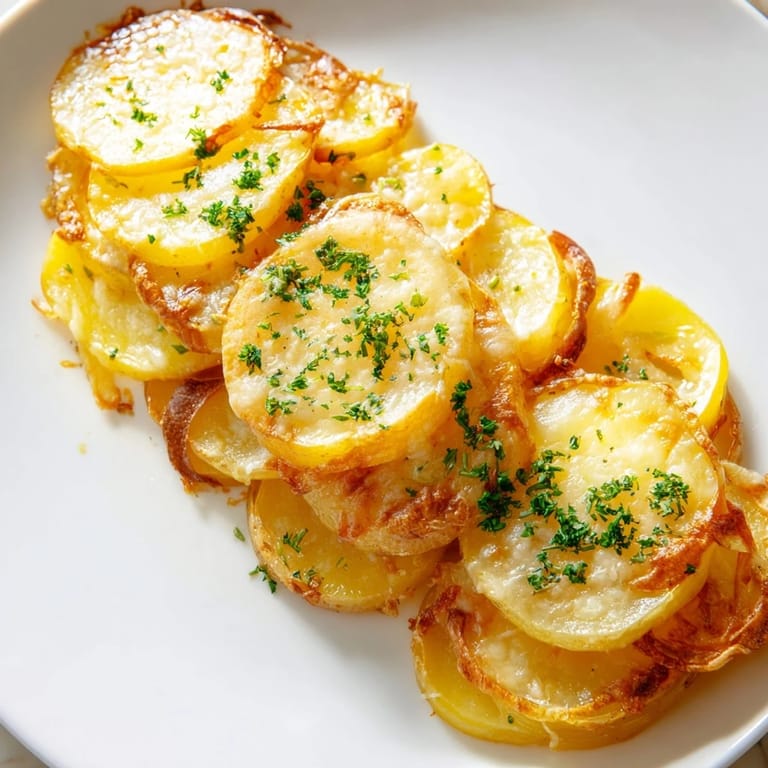
- Toss the slices with olive oil, salt, and pepper, then spread them in a single layer without crowding. Flip them halfway through roasting so both sides get that caramelized edge; this takes about 25 to 30 minutes at 425°F.
- Start the onions early:
- While potatoes roast, cook your sliced onions low and slow over medium-low heat in butter and olive oil. They'll start releasing their liquid, then gradually turn from white to pale gold to deep amber—this patience is everything.
- Coax out the sweetness:
- After about 10 minutes of gentle stirring, when they're soft and translucent, add the sugar and thyme. Keep stirring occasionally and let them deepen in color for another 20 to 25 minutes, reducing heat if they're browning too fast.
- Assemble with intention:
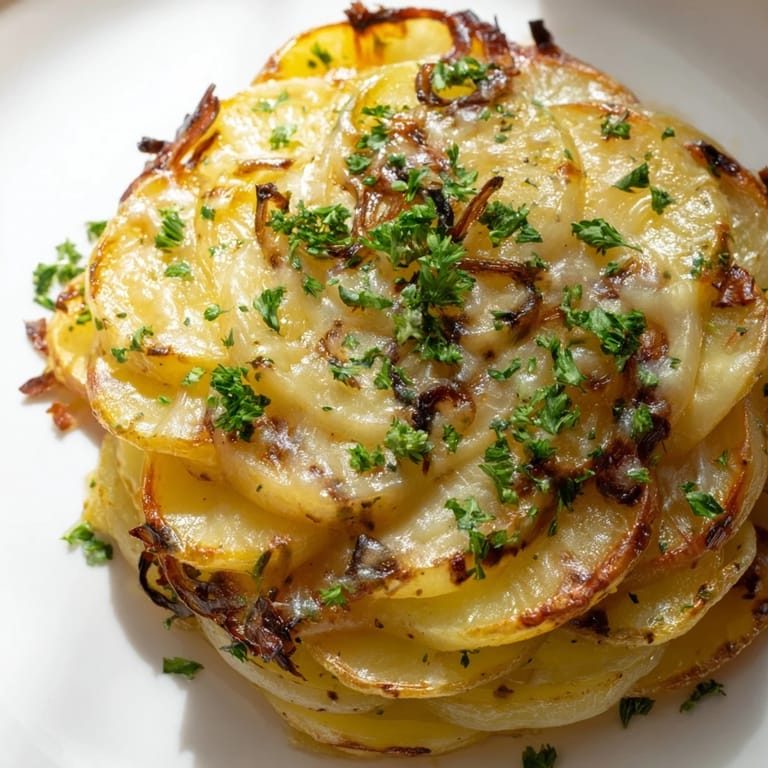
- Once the potatoes are tender and golden, layer them slightly overlapping in an ovenproof dish—think of shingles on a roof—then spread your caramelized onions evenly on top like a savory jam.
- Finish with cheese and heat:
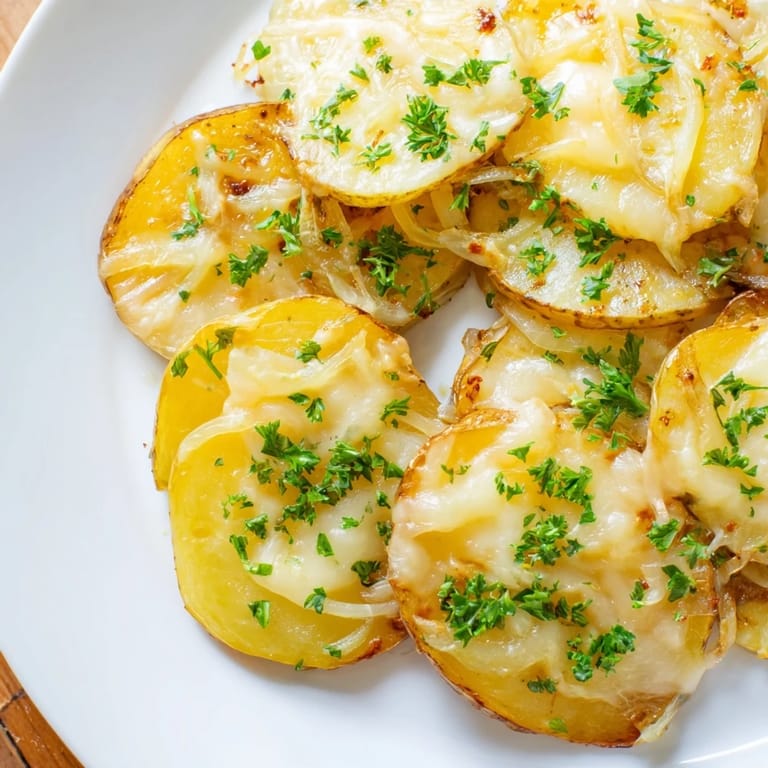
- Scatter Gruyère over everything and return to the oven for 10 to 12 minutes until it's melted and bubbling at the edges. If you want a deeper golden crust, hit it with the broiler for 2 to 3 minutes—watch closely so it doesn't burn.
 Save
Save I served this alongside a simple roasted chicken to my parents last spring, and my mom went back for seconds of the potatoes alone, barely touching her chicken. There was this quiet moment where everyone was just eating, not talking, and I understood then why this dish deserves a place at every table.
The Secret of Caramelization
Caramelization isn't magic, though it feels like it—it's the Maillard reaction, where heat transforms the natural sugars and proteins in onions into hundreds of new flavor compounds. The deeper you go, the more complex the flavor becomes, but there's a fine line between deep golden and burnt, which is why stirring occasionally and keeping the heat moderate matters so much. I learned this the hard way by ignoring a pan for five minutes, but now I set a gentle timer and trust the process.
Why This Works as a Side Dish
This dish bridges the gap between humble comfort food and something that feels intentional enough for a dinner party, which is precisely why it's become my secret weapon. It doesn't compete with the main course; instead, it makes whatever meat or vegetable you're serving taste better by adding umami depth and textural contrast. Plus, unlike many elaborate sides, most of the work happens while you're doing other things, so you're not stressed in the kitchen while guests arrive.
Variations and Flavor Twists
The foundation of this dish is solid enough that it welcomes small changes without losing its identity. A splash of dry white wine or sherry swirled into the onions at the very end adds brightness and depth, while a whisper of balsamic vinegar can deepen the caramel notes even further. Fresh herbs like tarragon or rosemary can replace or complement the thyme, and if you're feeling adventurous, a tiny pinch of nutmeg stirred into the onions reminds people of French onion soup without being obvious about it.
- Add a pinch of nutmeg to the onions for a subtle French onion soup nod.
- A splash of wine or sherry at the end of caramelizing adds brightness and complexity.
- Swap half the Gruyère for aged Emmental or even sharp cheddar if that's what you have on hand.
 Save
Save This dish reminds me why cooking for people matters—it's not about perfection, it's about capturing a moment and a flavor on a plate. Make it, adjust it to your tastes, and let it become part of your cooking repertoire.
Recipe FAQs
- → What type of potatoes work best for this dish?
Yukon Gold potatoes are ideal for their creamy texture and ability to hold shape after roasting.
- → How do you caramelize onions perfectly?
Cook sliced onions slowly over medium-low heat with butter and oil, stirring often until they turn deeply golden and sweet, about 30-35 minutes.
- → Can I substitute Gruyère cheese?
Yes, Swiss or Emmental cheeses are good alternatives that melt well and provide similar flavor profiles.
- → Is this dish gluten-free?
Yes, it is naturally gluten-free, but always verify cheese and packaged ingredients for any hidden gluten sources.
- → What herbs enhance the flavor?
Fresh thyme is traditionally added during caramelization to impart an earthy note, balancing the sweetness of onions.
- → Can I prepare this ahead of time?
You can roast potatoes and caramelize onions in advance, then assemble and bake just before serving to preserve freshness.