 Save
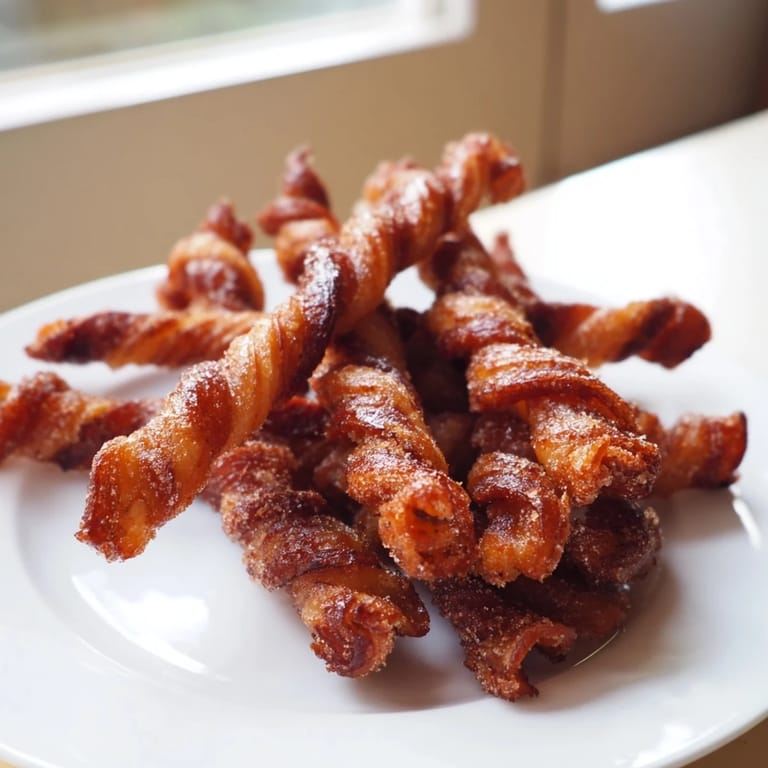
Save My neighbor knocked on my door one Saturday morning with a plate of these glistening bacon twists, still warm and crackling between her fingers. She'd made them for a brunch she was hosting and wanted my honest opinion before serving them to guests. One bite and I understood why she looked so proud—the bacon was impossibly crispy, shattered like glass, while the cinnamon sugar had caramelized into this deep, burnished crust that somehow tasted both sweet and savory at once. I pestered her for the recipe that same afternoon.
Last summer I brought a batch to a potluck, wrapped in parchment paper and tucked into a basket with some napkins. My friend Sarah grabbed one without asking what it was, took a bite, and her eyes went wide—she literally stopped mid-conversation to finish chewing. Within ten minutes the plate was empty and I had three people asking if I could make them for their upcoming events. That's when I realized these weren't just bacon; they were a conversation starter.
Ingredients
- Thick-cut bacon (12 slices): Thin bacon will char too quickly and turn bitter; thick-cut stays meaty under all that caramelized sugar and gives you something substantial to bite into.
- Light brown sugar (1/3 cup, packed): Brown sugar caramelizes beautifully and brings a molasses depth that white sugar can't match, creating those gorgeous golden-brown edges.
- Ground cinnamon (1 teaspoon): This is where the magic happens—the warmth of cinnamon against salty bacon is a combination that just works, period.
- Cayenne pepper (1/8 teaspoon, optional): A whisper of heat cuts through the richness and keeps the flavor from feeling one-dimensional; don't skip it even if spicy isn't usually your thing.
Tired of Takeout? 🥡
Get 10 meals you can make faster than delivery arrives. Seriously.
One email. No spam. Unsubscribe anytime.
Instructions
- Set the stage:
- Preheat your oven to 350°F and line a baking sheet with parchment paper or foil, then place a wire rack directly on top. This setup is non-negotiable—the rack lets heat circulate underneath so the bacon gets crispy instead of steaming in its own fat.
- Mix your spiced coating:
- In a shallow dish, combine the brown sugar, cinnamon, and cayenne (if you're using it). Give it a quick stir and make sure there are no lumps hiding in the brown sugar—a fork works beautifully for breaking those apart.
- Coat with intention:
- Take each bacon slice and drag it through the sugar mixture, making sure both sides get an even coating. You want a visible layer of spice-sugar clinging to the bacon, not just a light dusting.
- Create the twist:
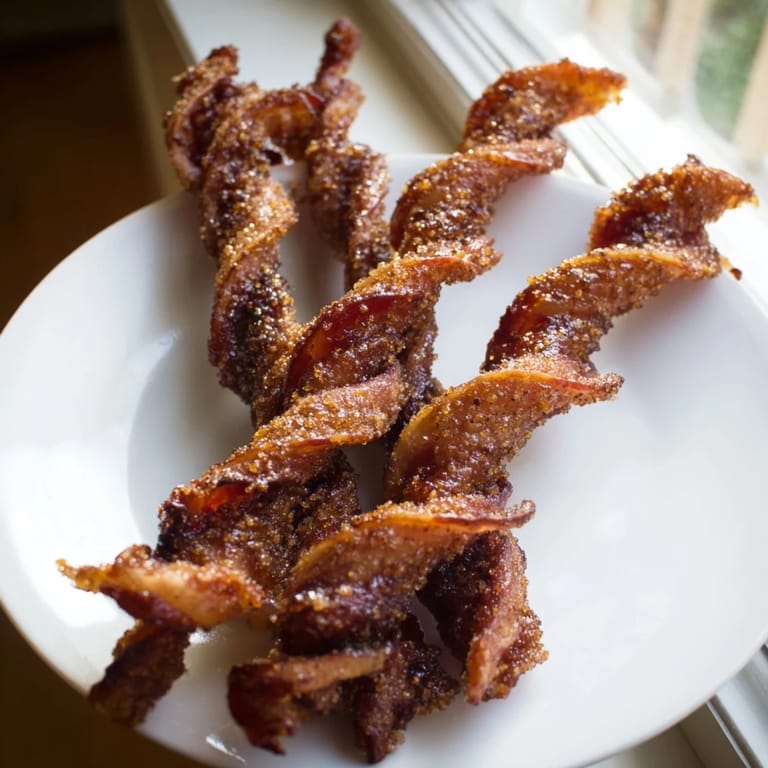
- Hold one end of the coated bacon slice and twist it several times toward the other end, creating a tight spiral. It doesn't have to be perfect—loose twists actually caramelize more dramatically and look more rustic.
- Arrange and season:
- Lay each twist on the wire rack with a bit of space between them, then sprinkle any leftover spiced sugar over the top. This extra layer becomes the most caramelized, crispy part.
- Bake and rotate:
- Bake for 25 to 30 minutes, rotating the tray halfway through so the bacon on each side gets evenly exposed to the heat. You're looking for that deep caramel color, not burnt black—the edges should look almost jewel-like.
- Cool before serving:
- Pull them from the oven and let them rest for about 5 minutes. This gives the caramelized coating time to harden and set so you get that satisfying crackle when you bite in.
 Save
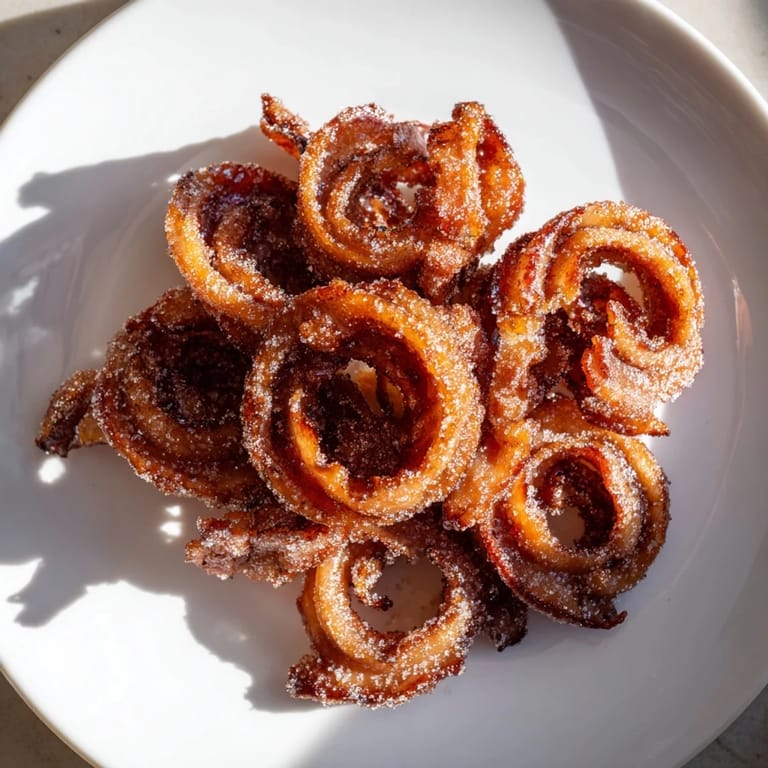
Save There's something about serving these at a gathering that shifts the whole vibe. They're elegant enough to feel special but casual enough that people don't feel guilty eating three in a row. I've watched them disappear faster than literally any other appetizer I've ever made, and I've never had someone not ask where the recipe came from.
The Science of Caramelization
The magic here isn't complicated—it's just sugar and heat doing what they do best. The brown sugar, when it hits the hot bacon in the oven, melts and caramelizes, turning that peachy-brown color into deep amber and bringing out a rich, almost nutty flavor. The cinnamon adds complexity that makes your brain work a little harder to figure out what you're tasting, which somehow makes it taste better. You're not just baking bacon; you're creating a tiny vessel of caramelized sweetness that shatters against salty, crispy meat.
Timing and Temperature Matter More Than You'd Think
I've made these at 375°F thinking I'd speed things up, and they ended up with burnt sugar and underdone bacon—a regrettable combination. At 350°F, everything moves at the right pace. The bacon crisps up while the sugar caramelizes gently instead of carbonizing, and rotating halfway through prevents the side facing the heating element from blackening while the other side lags behind. This is also why checking them around the 22-minute mark is smart—every oven runs a little different, and you want to catch them at peak crispness.
Creative Serving and Storage Ideas
Beyond just eating them as a snack, these twists work in surprising places. I've crumbled them into a salad, tucked them alongside eggs at brunch, and even used them to add a sweet-savory crunch to a charcuterie board where they stood out more than anything else. They keep in an airtight container for about three days, though they're honestly best eaten within a few hours when the texture is at its most dramatic contrast between crispy outside and tender inside.
- Warm them gently in a 300°F oven for a few minutes if they've lost their crackle and you want to revive them.
- Make these ahead and store them in an airtight container—they reheat beautifully and actually taste just as good cold as hot.
- Double the batch and freeze extras in a freezer bag for up to a month; they thaw and re-crisp faster than you'd expect.
 Save
Save These bacon twists have become my go-to when I want something that feels fancy but tastes like pure comfort. There's an ease to them that belies how impressive they actually are.
Recipe FAQs
- → Why does twisting the bacon help it cook better?
Twisting the bacon increases surface area and creates natural spacing between layers, allowing hot air to circulate evenly around the strips. This results in uniform crispness and better caramelization of the sugar coating on all sides.
- → Can I prepare the bacon ahead of time?
Yes, you can coat the bacon slices in the spiced sugar mixture and refrigerate them for up to 4 hours before baking. This actually helps the coating adhere better and allows flavors to meld slightly.
- → What's the purpose of the wire rack?
The wire rack elevates the bacon above the baking sheet, allowing fat to drip away during cooking. This prevents the bacon from sitting in grease and ensures it becomes crispy rather than greasy.
- → How do I store leftover twisted bacon?
Store cooled bacon in an airtight container at room temperature for up to 2 days or refrigerate for up to 5 days. Reheat briefly in a 300°F oven to restore crispness before serving.
- → Can I use thin-cut bacon instead of thick-cut?
Thin-cut bacon will cook faster and may become overly brittle. Reduce baking time to 15-20 minutes and monitor closely. Thick-cut bacon holds its shape better and provides superior texture and flavor.
- → What variations work well with this preparation?
Try maple sugar for autumn flavors, add nutmeg or ginger for warm spices, dust with smoked paprika, or include a pinch of espresso powder to deepen the caramel notes. Experiment with different brown sugar ratios for varying sweetness levels.