 Save
Save My neighbor handed me a lettuce wrap at a summer cookout, and I was skeptical—until that first bite hit. The warmth of spiced black-eyed peas against the cool crunch of butter lettuce felt like two completely different meals happening at once, and somehow it worked. I spent the rest of the afternoon asking her questions, scribbling notes, and realizing that the best appetizers are often the simplest ones, the ones that don't try too hard. Now I make these whenever I need something that feels both special and effortless, something people can actually eat without a plate or fork.
I made a double batch for my daughter's soccer team picnic, and watching everyone grab these with both hands, no silverware needed, no mess, was oddly satisfying. One girl came back for thirds and asked me if I sold these, which made my day more than any recipe compliment ever could. That's when I knew these wraps had earned their place in my regular rotation.
Ingredients
- Black-eyed peas (1 can, drained and rinsed): The foundation that keeps you full without weighing you down, and rinsing them removes that starchy liquid that nobody talks about but everyone notices.
- Olive oil (1 tablespoon): Just enough to carry the flavors without making everything slick and heavy.
- Red onion (1 small, finely diced): When you dice it small, it softens into something sweet rather than harsh, which is the whole difference.
- Red bell pepper (1 small, diced): The brightness you need, and it adds natural sweetness that balances the earthiness of the peas.
- Carrot (1 medium, shredded): Shred it instead of chop it so it disappears slightly into the texture while still adding color and a subtle mineral taste.
- Garlic (1 clove, minced): Don't skip this even though it's just one clove—one is enough here, and more would overpower the delicate balance.
- Smoked paprika (1 teaspoon): This is what makes people ask what your secret ingredient is, even though it's sitting right there in their mouth.
- Ground cumin (1/2 teaspoon): A warm whisper of earthiness that ties everything together without announcing itself.
- Salt and black pepper: Taste as you go because canned peas vary in their saltiness, and you're the boss of your own food.
- Lemon juice (from 1/2 lemon): Add this off the heat so the acid stays bright and doesn't cook away into nothing.
- Cherry tomatoes (1/2 cup, quartered): They go in last, raw, so they stay juicy and pop in your mouth.
- Fresh cilantro or parsley (1/4 cup, chopped): Go with cilantro if you love it, parsley if you're cilantro-averse—no judgment either way.
- Green onions (2, thinly sliced): The fresh finish that reminds your palate this is alive and not from a can.
- Butter lettuce or romaine leaves (8 large): Butter lettuce is softer and more forgiving if you overfill, but romaine gives you more structural integrity for grabbing.
- Avocado (1 ripe, optional): If you use it, slice it right before serving or it'll turn that sad shade of brown that haunts us all.
- Hot sauce or sriracha (to taste): This is for people who think food isn't spicy enough until it fights back.
Tired of Takeout? 🥡
Get 10 meals you can make faster than delivery arrives. Seriously.
One email. No spam. Unsubscribe anytime.
Instructions
- Soften the onion first:
- Heat your oil over medium until it shimmers, then add the diced red onion. Listen for that gentle sizzle and watch it turn translucent at the edges—about 2 to 3 minutes. This is non-negotiable because raw onion has an aggressive bite that cooked onion loses.
- Build layers of flavor:
- Toss in the bell pepper, carrot, and garlic. Keep the heat at medium and stir occasionally for another 2 to 3 minutes. Your kitchen should smell incredible now, and that's your sign you're on the right track.
- Wake up the spices:
- Add the black-eyed peas along with the paprika and cumin, then season with salt and pepper. Cook for 3 to 4 minutes while stirring—the spices need heat to bloom and show you what they're made of.
- Brighten everything with acid and fresh ingredients:
- Pull the pan off the heat and immediately stir in the lemon juice so it stays zippy. Fold in the cherry tomatoes, cilantro, and green onions, tossing everything together gently so nothing bruises.
- Assemble your wraps:
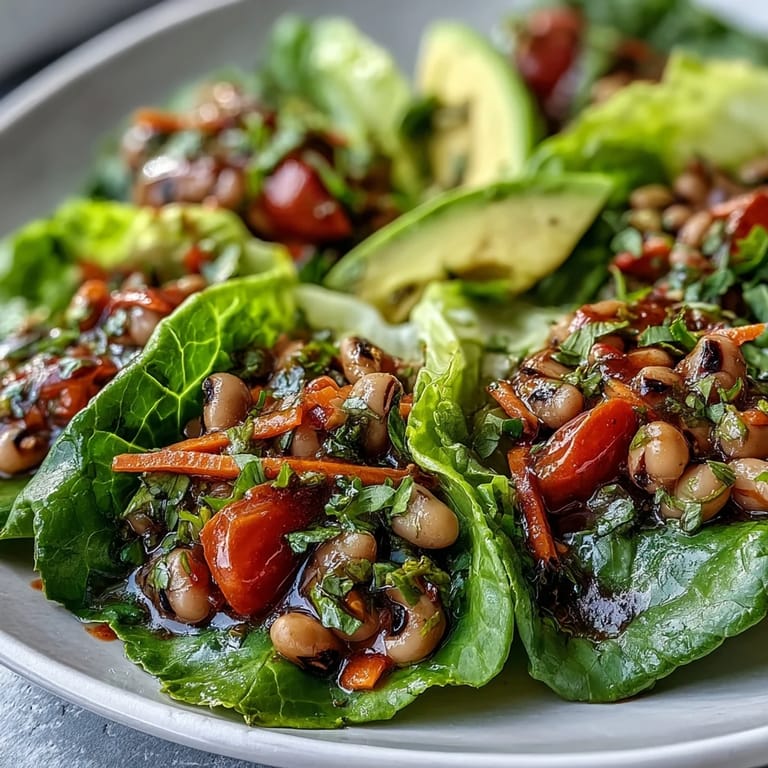
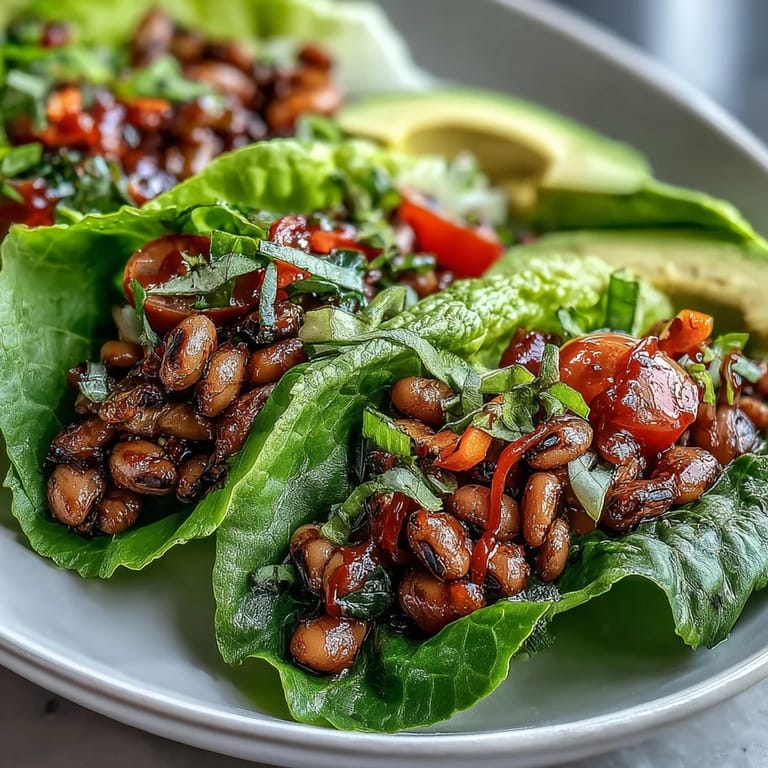
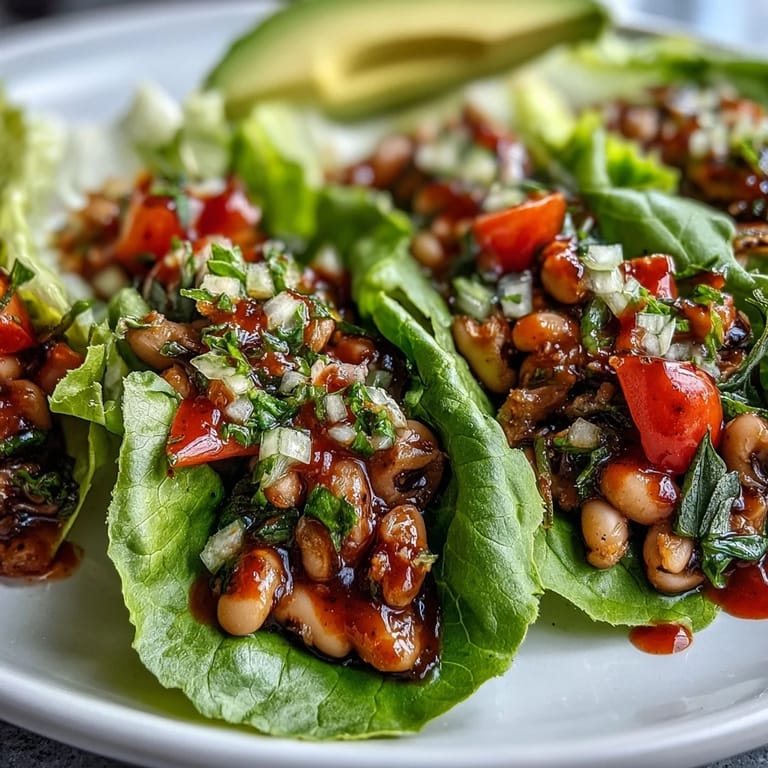
- Lay a lettuce leaf flat, spoon a generous amount of the warm mixture down the center, add avocado slices if you're using them, and hit it with hot sauce if that's your speed. Fold the lettuce around the filling and serve right away while the filling is still warm and the lettuce is still crisp.
 Save
Save These wraps taught me that food doesn't need to be complicated to be memorable. My son, who usually negotiates every vegetable on his plate, asked for seconds without being asked, and that's when I realized I'd stumbled onto something that works across all the picky-eaters and adventurous-eaters in my life.
The Art of Dicing and Prepping
The smaller you dice everything, the more evenly the filling distributes in each bite and the less chance someone gets a mouthful of just onion. I learned this the hard way with oversized chunks that made the wraps unbalanced. Now I take my time with the knife because five extra minutes of prep means the eating experience is ten times better. Keep your cutting board clean between vegetables so flavors don't bleed into each other, and taste a piece of raw red onion before cooking it—sometimes they vary in intensity and you'll want to adjust accordingly.
Temperature and Timing Matter
The warmth of the filling against the cool crispness of the lettuce is the whole point, so don't let everything cool down before you assemble. If you're feeding a crowd and need to make these ahead, keep the filling warm in a low oven and assemble them just before serving. The moment you fold that lettuce around the warm mixture and hand it to someone, you've won.
Creative Variations and Add-Ins
Once you understand how this works, you can play with it endlessly. I've added diced cucumber for extra crunch on hot days, swapped in chickpeas or black beans when that's what I had on hand, and even tried a squeeze of lime instead of lemon. The base is forgiving enough to let you experiment while staying true to itself. Here are my favorite tweaks that actually work:
- Shredded cabbage adds another layer of crunch and makes the whole thing feel more substantial.
- A tiny drizzle of tahini mixed into the filling adds richness without making it heavy.
- Diced cucumber added at the very end keeps things cool and prevents everything from getting mushy.
 Save
Save These wraps have become my go-to when I want something that feels intentional but doesn't trap me in the kitchen. Serve them at your next gathering and watch people's faces when they realize how good simple food can actually be.
Recipe FAQs
- → Can I make these wraps ahead of time?
Prepare the black-eyed pea filling up to 24 hours in advance and store it in an airtight container in the refrigerator. Keep the lettuce leaves separate and wash them just before serving to maintain crispiness. The filling actually tastes better after the flavors have had time to meld together.
- → What other leafy greens work well for wrapping?
Butter lettuce and romaine leaves provide the best shape and crunch. You can also try large collard green leaves for a heartier wrap, or use cabbage leaves for extra crunch. Iceberg lettuce works too but may crack more easily when folding.
- → Can I use dried black-eyed peas instead of canned?
Absolutely. Soak 1 cup of dried black-eyed peas overnight, then simmer for 45-60 minutes until tender. Drain well and proceed with the recipe. This method yields about 3 cups of cooked peas, equivalent to two 15-ounce cans.
- → How do I prevent the lettuce leaves from getting soggy?
Thoroughly wash and completely dry the lettuce leaves before filling. Pat them with paper towels or use a salad spinner. Serve the filling warm rather than hot, and assemble just before eating rather than letting them sit too long.
- → What protein additions complement these wraps?
While black-eyed peas provide plenty of protein, you can add shredded chicken, grilled shrimp, or crumbled feta cheese. For vegan protein options, consider adding quinoa, hemp seeds, or chopped walnuts to boost both protein and healthy fats.
- → How can I add more flavor to the filling?
Add a tablespoon of Dijon mustard or tahini to the warm pea mixture. Try minced fresh ginger or a splash of rice vinegar. Fresh herbs like basil, mint, or dill work beautifully alongside or instead of cilantro.