 Save
Save There's something almost meditative about arranging a fruit platter, especially when you commit to a color story. I discovered this approach one late summer afternoon when a pomegranate split open on my cutting board, and instead of just tossing it into a bowl with other fruits, I paused and noticed how its deep crimson seeds could anchor something more intentional. What started as a visual experiment became a signature dish I now make whenever I want to impress without stress.
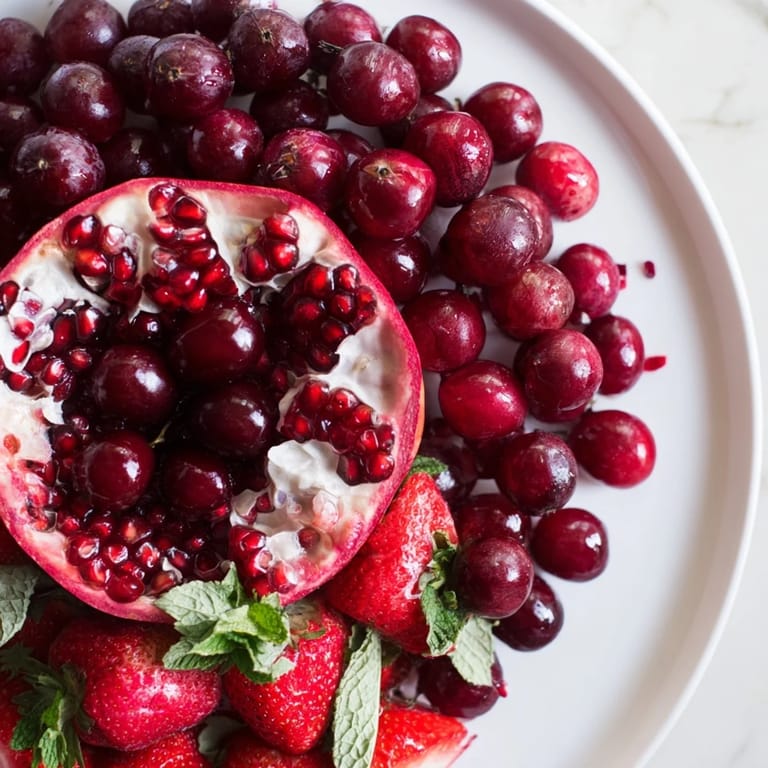
I made this for my sister's engagement party last spring, and watching guests photograph it before eating felt like the highest compliment. The pomegranate in the center became this natural focal point that made the whole platter feel deliberate, like I'd studied color theory when really I'd just been hungry and inspired.
Ingredients
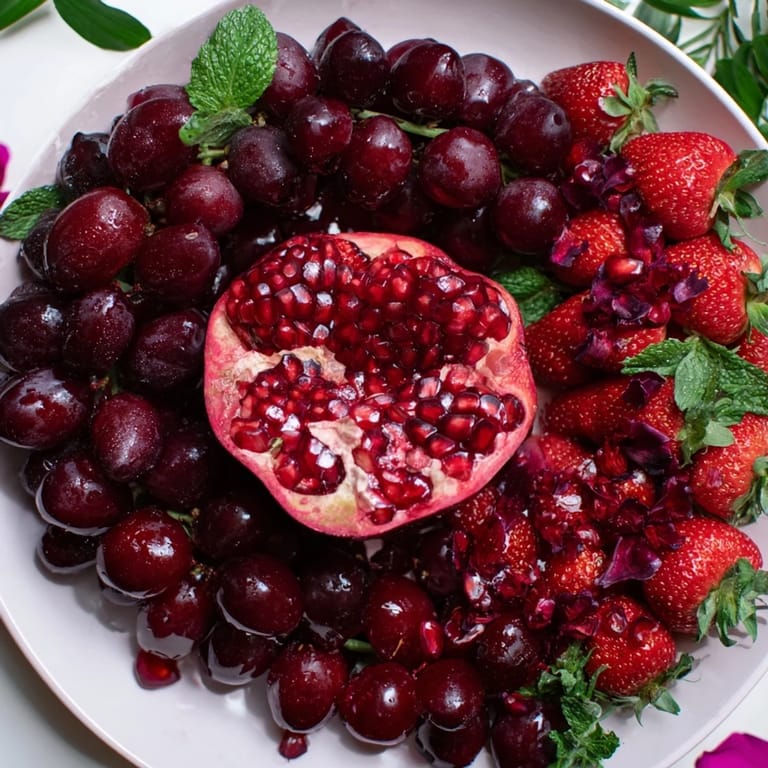
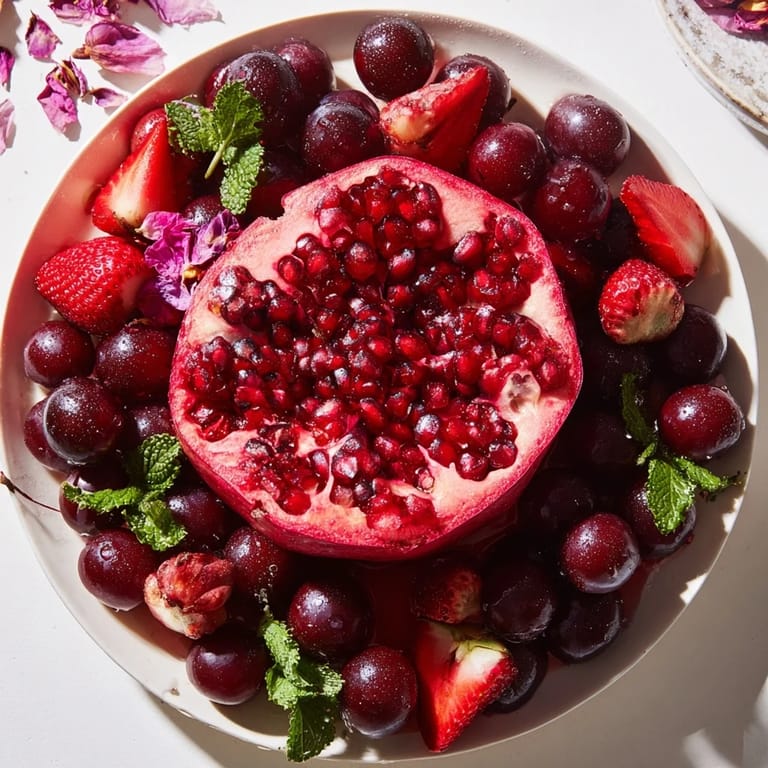
- 1 large pomegranate, halved: This is your anchor—let it sit cut-side up in the center like a crown. The weight of its presence makes every other fruit feel more intentional.
- Dark cherries and red grapes: These go down first in a crescent, giving you depth and that jewel-like quality that stops people mid-bite.
- Strawberries: Hull them just before arranging so they stay bright and don't weep into the other fruits.
- Raspberries, watermelon, pink grapefruit: The middle gradient—these transition the eye without screaming for attention.
- Dragon fruit, apple, pear: The pale outer ring softens everything; use pink or blush varieties if you can find them.
- Fresh mint and edible rose petals: Optional, but they add whispers of flavor and make the whole thing feel a little more special.
Tired of Takeout? 🥡
Get 10 meals you can make faster than delivery arrives. Seriously.
One email. No spam. Unsubscribe anytime.
Instructions
- Set Your Stage:
- Place the pomegranate halves cut-side up right in the middle of your biggest platter. This is your anchor point—everything else radiates from here.
- Begin with Deep Reds:
- Arrange pitted cherries, red grapes, and hulled strawberries in a loose crescent around the pomegranate. Let them overlap slightly; perfection here actually looks less natural.
- Layer the Pink Transition:
- Add raspberries, watermelon cubes, and grapefruit segments next to the red fruits. You're creating a gradient, so think of it as a gentle fade rather than a hard line.
- Build the Outer Ring:
- Place cubed dragon fruit, apple slices, and pear slices around the outer edge. If your apples or pears are browning slightly, a tiny brush of lime juice stops that without making them soggy.
- Final Flourish:
- Scatter mint leaves and rose petals across the platter if you're using them. They don't need to be strategic—a few petal here, a leaf there creates movement without looking fussy.
- Serve or Chill:
- If you're eating immediately, go for it. If not, cover loosely with plastic wrap and refrigerate for up to 4 hours; any longer and the edges start to dull.
 Save
Save There was one moment, maybe three seconds long, when my nephew looked at this platter and didn't immediately reach for food—he just stared. That's when I realized it had become more than just fruit on a plate; it was permission to slow down and notice something beautiful. I've chased that reaction ever since.
Choosing Your Fruits
Seasonality makes this dish shine or struggle, so let yourself adapt. In summer, fresh strawberries and watermelon are obvious choices, but winter calls for persimmons, kiwis, and pomegranate seeds themselves. The rule I follow is simple: if the fruit looks dull at the market, it'll look dull on the platter. Shop with your eyes first, then build the color gradient backward from what you find. This flexibility is why the dish works year-round without ever feeling repetitive.
The Pomegranate as Centerpiece
Using a halved pomegranate as the visual anchor was born from pure accident—I'd been trying to figure out how to include pomegranate seeds without them rolling everywhere when I realized the fruit itself was the answer. The crimson, exposed seeds create this natural magnetism that pulls the eye inward, and guests instinctively know they can pick it apart and eat while they graze. It transforms a static platter into something interactive and alive.
Timing and Storage Secrets
The magic window for this platter is the two hours after you arrange it, when everything is cold and colors are at their most vivid. If you must make it earlier, prep the pomegranate first, then keep all your other fruits in separate bowls in the fridge; final assembly takes maybe five minutes. A light drizzle of lime juice across the whole thing not only prevents browning but adds a subtle brightness that makes people wonder what the secret ingredient is.
- Prep fruits in advance, but arrange no more than a few hours before serving.
- If raspberries start softening, replace them just before guests arrive.
- A damp paper towel tucked underneath the platter keeps everything stable and prevents sliding.
 Save
Save This platter has become my quiet confidence builder in the kitchen—it proves that impressive food doesn't require skill, just intention. Make it once and you'll understand why.
Recipe FAQs
- → How do I prevent apple and pear slices from browning?
Lightly drizzle lime juice on apple and pear slices to maintain their fresh appearance and prevent browning.
- → What fruits can I substitute seasonally?
Try using red currants, pomegranate seeds, lychees, or peaches for a seasonal variation of the platter.
- → Can I prepare this platter in advance?
You can assemble the platter ahead of time and cover it tightly, refrigerating until ready to serve to preserve freshness.
- → What is the best way to arrange the fruits for a smooth color transition?
Layer fruits in overlapping crescent shapes, moving from deep reds near the center to paler pink and white fruits along the edges for a gradient effect.
- → Are garnishes necessary, and what effect do they add?
Fresh mint leaves and edible rose petals are optional but enhance visual appeal and provide subtle fresh aromas.