 Save
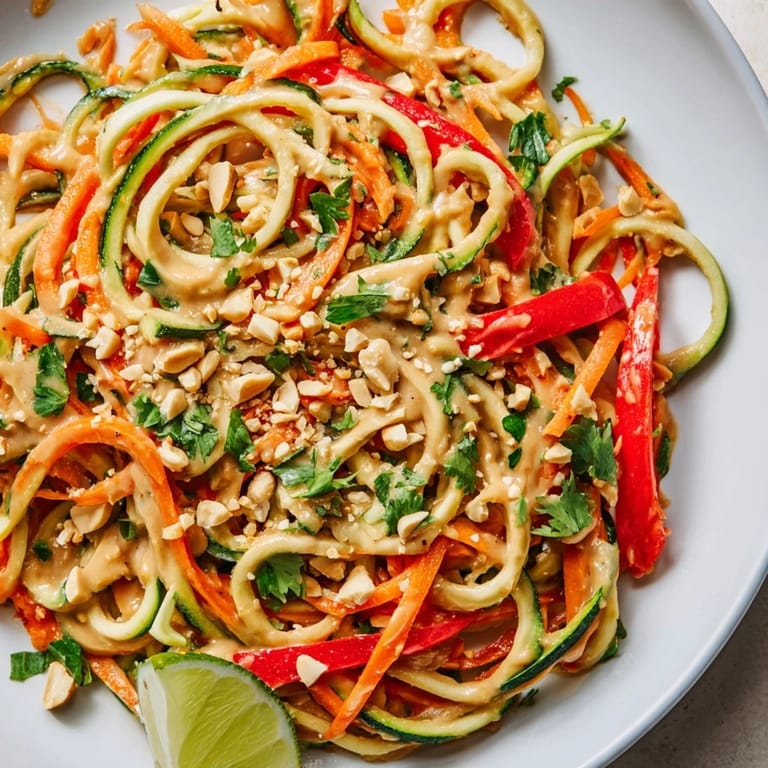
Save The first time I made zucchini noodles, I was skeptical. I'd bought a spiralizer on a whim, and it sat in my drawer for months gathering dust. Then on a humid July afternoon, my fridge was overflowing with zucchini from the farmers market, and I remembered that spiralizer sitting there. Within minutes, I had these delicate green ribbons piled on my cutting board, and I realized I'd been missing out on something special. The peanut sauce came together almost by accident—I was reaching for different bottles in my pantry, tasting as I went, and suddenly I'd created something so bright and addictive that my partner came back for seconds without even asking what was in it.
I made this for a potluck dinner where everyone else brought heavy casseroles and pasta salads. Someone asked what the green noodles were, half skeptical, and by the end of the night the bowl was scraped clean while the other dishes still had leftovers. That's when I knew this recipe had something worth sharing.
Ingredients
- Spiralized zucchini (4 medium): The foundation of everything—spiralizing creates this tender, delicate texture that soaks up the sauce beautifully, and they stay firm enough not to get mushy if you're making this ahead.
- Shredded carrots (1 cup): They add a subtle sweetness and crunch that keeps each bite interesting, plus they look gorgeous in the bowl.
- Red bell pepper, thinly sliced (1): Choose one that feels heavy for its size—that's when they're juiciest and sweetest.
- Scallions, thinly sliced (2): Slice them right before tossing everything together so they stay bright and crisp.
- Fresh cilantro, chopped (1/2 cup): If cilantro tastes like soap to you, parsley works just as well and gives you that same herbal freshness.
- Roasted peanuts, chopped (1/4 cup plus extra): Toast them yourself if you have time—there's a difference in flavor that makes it worth the extra five minutes.
- Creamy peanut butter (1/3 cup): Natural and unsweetened tastes cleaner, but if all you have is the sweetened kind, you can make it work by cutting back the honey slightly.
- Soy sauce or tamari (2 tablespoons): Use tamari if you need it gluten-free, or if you're watching sodium, low-sodium soy sauce doesn't compromise the flavor.
- Rice vinegar (1 tablespoon): This is the secret that keeps the sauce from tasting heavy—it adds brightness that brings everything together.
- Honey or maple syrup (1 tablespoon): A touch of sweetness that balances the saltiness and heat without making it dessert.
- Toasted sesame oil (1 tablespoon): Buy it fresh and store it in a cool spot—it goes rancid faster than regular oil, and that's when it starts tasting musty.
- Fresh lime juice (1 tablespoon): Squeeze it right before you make the sauce so you get that sharp acidity at its peak.
- Sriracha or chili garlic sauce (1 teaspoon, optional): Start with less than you think you need—you can always add more, but you can't take it back.
- Warm water (2–4 tablespoons): Use this to get the sauce to the right consistency, adding a tablespoon at a time as you whisk.
- Sesame seeds (1 tablespoon for garnish): Toast them in a dry skillet for ten seconds right before serving to bring out their nutty flavor.
- Lime wedges: A squeeze at the table is a nice touch that lets people customize their own saltiness and brightness.
Tired of Takeout? 🥡
Get 10 meals you can make faster than delivery arrives. Seriously.
One email. No spam. Unsubscribe anytime.
Instructions
- Prep Your Vegetables:
- Place your spiralized zucchini, carrots, bell pepper, scallions, and cilantro into a large bowl. If you're spiralizing the zucchini by hand and they come out wet, gently press them with a paper towel to remove excess moisture so the sauce doesn't get diluted. Do this assembly just before you make the sauce so everything stays crisp.
- Create the Sauce:
- In a separate bowl, whisk together the peanut butter, soy sauce, rice vinegar, honey, sesame oil, lime juice, and sriracha if you're using it. Start with two tablespoons of warm water and whisk until smooth, then add more water one tablespoon at a time until you reach that pourable consistency—it should coat the back of a spoon but still drip off easily.
- Toss Everything Together:
- Pour the sauce over your vegetables and toss with both hands or two serving spoons until every strand of zucchini is coated. You want this to happen pretty quickly so the zucchini stays firm.
- Add the Crunch:
- Sprinkle in the chopped peanuts and toss once more to distribute them evenly throughout the salad.
- Plate and Garnish:
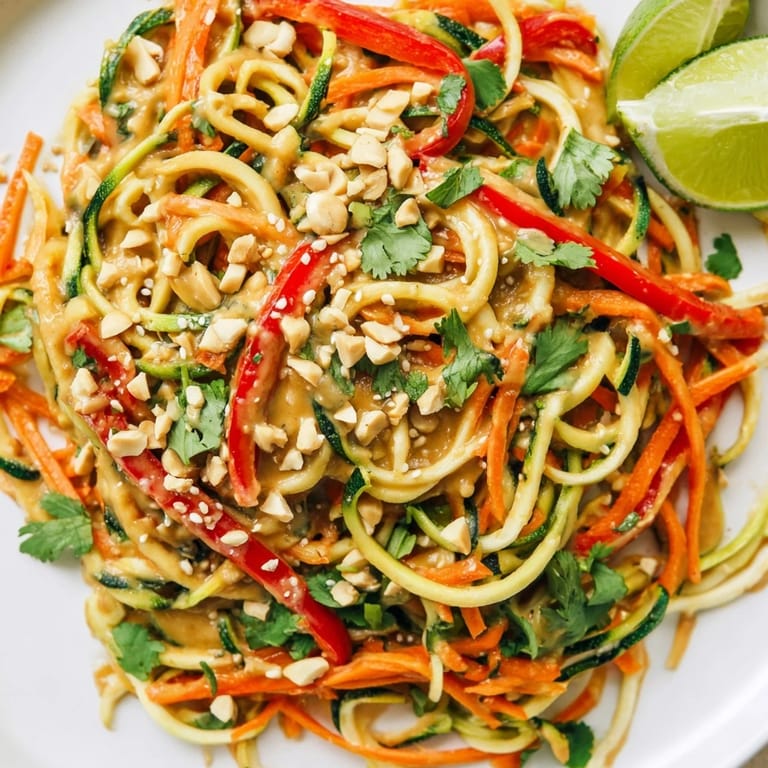
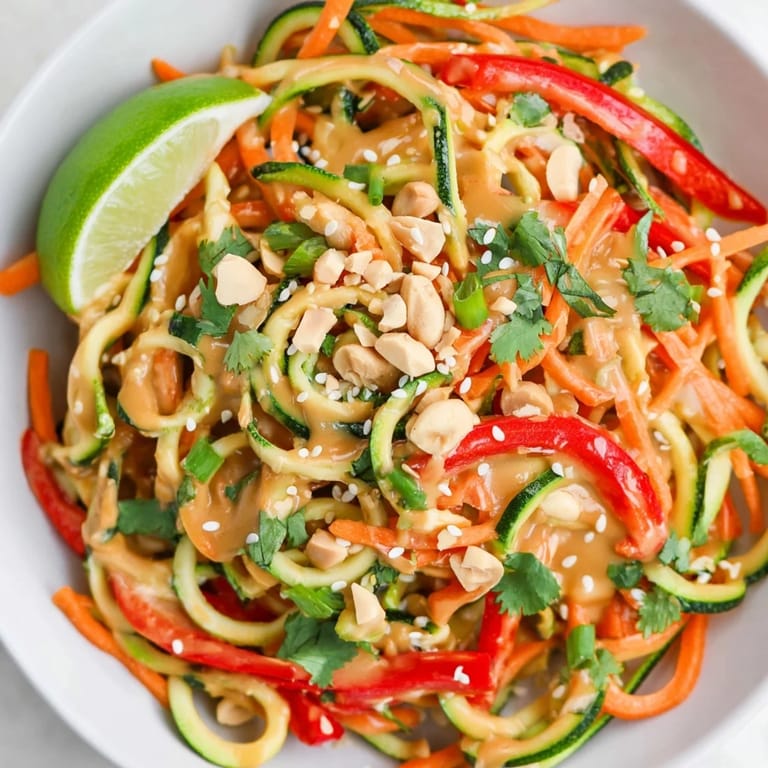
- Transfer to serving bowls or a platter, then scatter sesame seeds and extra peanuts on top. A handful of fresh cilantro and a few lime wedges on the side let people finish their own bowls to their taste.
- Serve or Chill:
- This is good warm from assembly, but if you've got time, chilling it for twenty to thirty minutes lets all the flavors settle together and creates something even more cohesive. Either way, serve it the same day you make it so the zucchini doesn't get watery.
 Save
Save I brought this to a dinner where my cousin was trying to eat lighter after a health scare, and watching her come back for thirds told me this recipe does something more than just taste good—it makes you feel better about what you're eating. That matters.
Protein Additions That Make It a Complete Meal
The salad as written is vegetarian and hits about eight grams of protein per serving from the peanut butter, but if you want to make it more substantial, there are a few directions you can take it. Grilled tofu marinated in a bit of soy sauce and sesame oil becomes crispy on the outside and soaks up any extra sauce left in the bowl. Shredded rotisserie chicken makes it feel more like a full dinner, and the peanut sauce was practically designed for that combination. If you keep cooked edamame on hand, they add protein and a nice firm bite that rounds out the texture.
Flavor Variations Worth Trying
Once you understand how this sauce works, you can start playing with it. A splash of coconut milk makes it creamier and mellows out any heat from the sriracha. Ginger adds warmth and sophistication, and a teaspoon of fish sauce (if you're not vegetarian) adds a savory depth that's hard to describe but changes everything. You can also swap the zucchini for cucumber in the summer when it's at its peak, or mix in shredded carrot noodles for something earthier and heartier.
Storage and Keeping It Fresh
This salad is best eaten the day you make it, but the components keep separately for a couple of days in the fridge, and the sauce lasts even longer tightly covered. You can spiralize your zucchini in the morning and keep it on paper towels in a container so it's ready to go at dinner time. The magic happens when you dress it fresh, so treat the vegetables and sauce as separate entities until you're ready to eat.
- Store spiralized zucchini on paper towels in the fridge so they don't get soggy.
- Keep the peanut sauce in a jar and shake it before pouring—the oils separate as it sits, which is totally normal.
- Chop your fresh cilantro right before serving so it stays bright green and doesn't blacken.
 Save
Save This recipe reminds me that some of the best meals don't need heat or complexity—just good ingredients, a little technique, and the courage to trust that simple things taste better when they're made with intention. I hope it becomes one of those recipes you make again and again.
Recipe FAQs
- → Can I substitute the peanut butter?
Yes, sunflower seed butter is a great alternative for those with peanut allergies, offering a similar creamy texture and nutty flavor.
- → How can I adjust the spiciness?
Adjust the amount of sriracha or chili garlic sauce in the peanut dressing to control the heat level according to your preference.
- → What is the best way to spiralize zucchini?
Use a spiralizer or julienne peeler to create long, noodle-like strands from zucchini, ensuring even texture and easy mixing with the sauce.
- → Can I add protein to this dish?
Adding grilled tofu, shredded chicken, or edamame boosts protein content without overpowering the fresh flavors.
- → How should I serve this dish?
Serve immediately for a fresh crunch or chill for 20–30 minutes to let flavors meld and enhance the taste.
- → Are there gluten-free options?
Use tamari instead of soy sauce to maintain gluten-free status without sacrificing flavor.