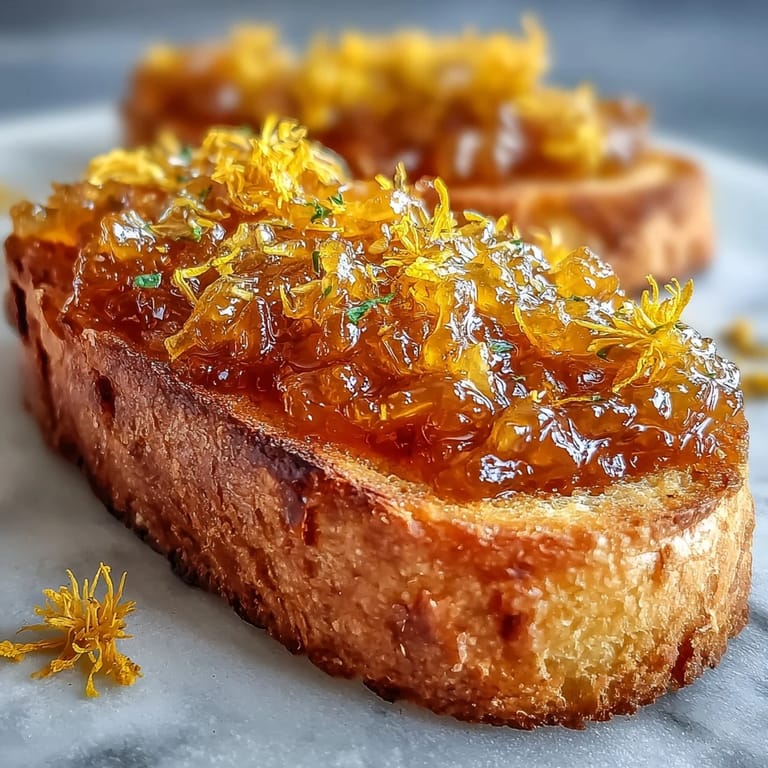
 Save
Save The scent of dandelion blooms in early spring always reminds me of the first batch I ever transformed into jelly, a project I began more out of curiosity than confidence. I had gathered the petals with my sleeves rolled up and the sun warming my back, never imagining that the resulting jars would glow golden and taste so delicately floral. The kitchen filled with a grassy, honeyed aroma while I waited for the infusion to steep, and my friends, skeptical at first, ended up asking me for more. Watching the simple ingredients turn into something beautiful felt like a small, everyday miracle. There's something wonderfully playful about pinching petals and coaxing them into a unique sweet treat.
One Saturday, I brought a jar to brunch with neighbors, and their reactions were priceless—a quiet hush as everyone spread it onto warm biscuits and tried to guess its flavor. The conversation quickly shifted from dandelion trivia to recipe swapping, and we all admired how the jelly sparkled in morning light. It felt like a gift to introduce something new and gather smiles around it. That moment made jelly-making less about the process and more about shared delight. It's now my answer to the question 'what can you do with dandelions?'
Ingredients
- Dandelion petals: Use only the yellow parts—the green bits can make things bitter, and picking them off is oddly soothing.
- Water: Fresh, cold water works best for extracting that gentle flavor; filtering avoids odd aftertastes.
- Lemon juice: Lifts the floral notes and brings balance; fresh juice adds brighter zing but bottled is reliable.
- Powdered fruit pectin: Ensures the jelly sets with a soft wobble; check your box for exact weight.
- Granulated sugar: Sweetens and preserves, turning dandelion 'tea' into a gleaming jelly.
Tired of Takeout? 🥡
Get 10 meals you can make faster than delivery arrives. Seriously.
One email. No spam. Unsubscribe anytime.
Instructions
- Petal Preparation:
- Rinse the dandelion flowers thoroughly, then patiently pinch only the yellow petals, leaving behind any green sepals. This adds a cheerful moment to your prep—it's a quiet job and you'll find the pile builds quickly.
- Steeping and Straining:
- Bring water to a boil, stir in your petals, and breathe in the grassy sweetness. Cover and let steep for at least 4 hours (or overnight if you'd like the flavor stronger), then strain through cheesecloth, pressing gently to get every drop.
- Cooking the Jelly:
- Pour the strained dandelion tea into a large saucepan, mix in lemon juice and pectin. Stir over high heat, watching for a lively, rolling boil; then add sugar all at once and boil hard for 1–2 minutes, stirring as the steam rises and the smell turns sweet.
- Jarring and Processing:
- Ladle the hot jelly into sterilized jars, carefully wiping the rims clean, and seal. Process jars in a boiling water bath for five minutes, or just cool and refrigerate if you're impatient—either way, admire your glowing jars.
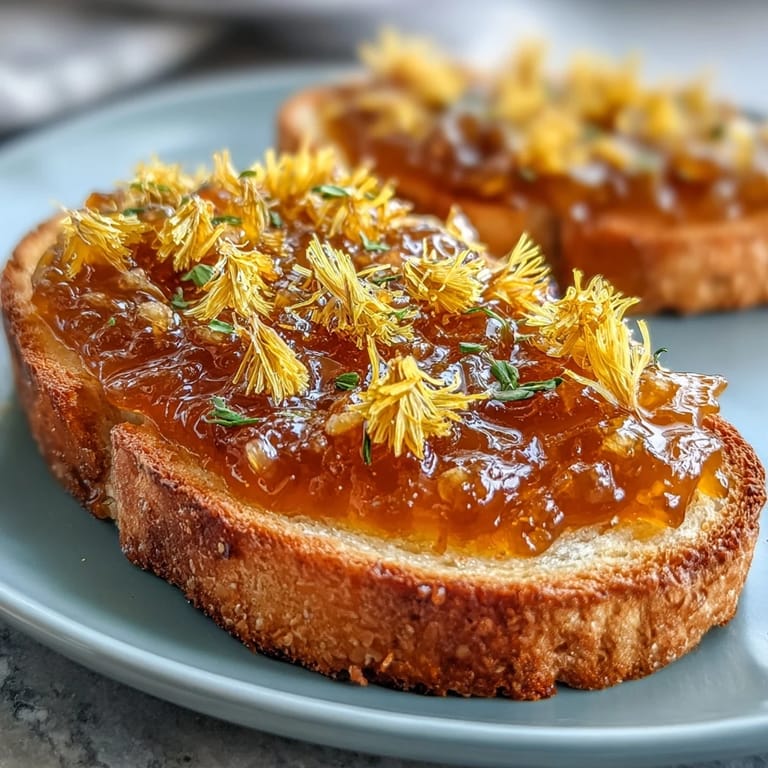 Save
Save The first time the jelly set, I remember the satisfying 'pop' of cooling lids and how a warm breeze carried in the scent of spring—it felt less like cooking and more like bottling a season. Sharing a spoonful with my partner, we both laughed at how something so ordinary could taste so magical. That batch taught me to pay attention to little details. Dandelion jelly now marks the start of brighter days in my kitchen. Each year, those jars become little tokens of optimism.
What to Watch For in Texture
The jelly should have a soft, spreadable wobble—not too firm or loose. If yours feels runny after cooling, you can reboil it with a touch more pectin and lemon juice. Sometimes, the jelly turns out incredibly clear, other times slightly cloudy, but the flavor always shines through. Don’t be discouraged if the texture isn’t perfect the first try. Even a looser batch is delicious on yogurt or pancakes.
Making Jelly with the Youngest Helpers
Kids love plucking petals for this—it's a task with instant rewards and even the most impatient can help. I often set up bowls and let little hands scatter petals, turning the kitchen table into a fluttery mess. They marvel at how the tea turns golden, and the sugar fizzing into the saucepan always gets a giggle. It's a fun way to teach patience, waiting for the jelly to cool and set overnight. Every step invites curiosity and lively conversation.
How to Store and Serve
Your finished jelly will last beautifully for a year if sealed and stored in a cool, dark cupboard. Once open, keep in the fridge and use within a few weeks for freshest flavor. It tastes wonderful on toast, but is also a surprise addition to cakes or swirled into yogurt.
- Label each jar with date and flavor for easy tracking.
- Gift a jar wrapped in ribbon for a cheerful hostess offering.
- If you detect crystallization, gently rewarm and stir to restore the smooth texture.
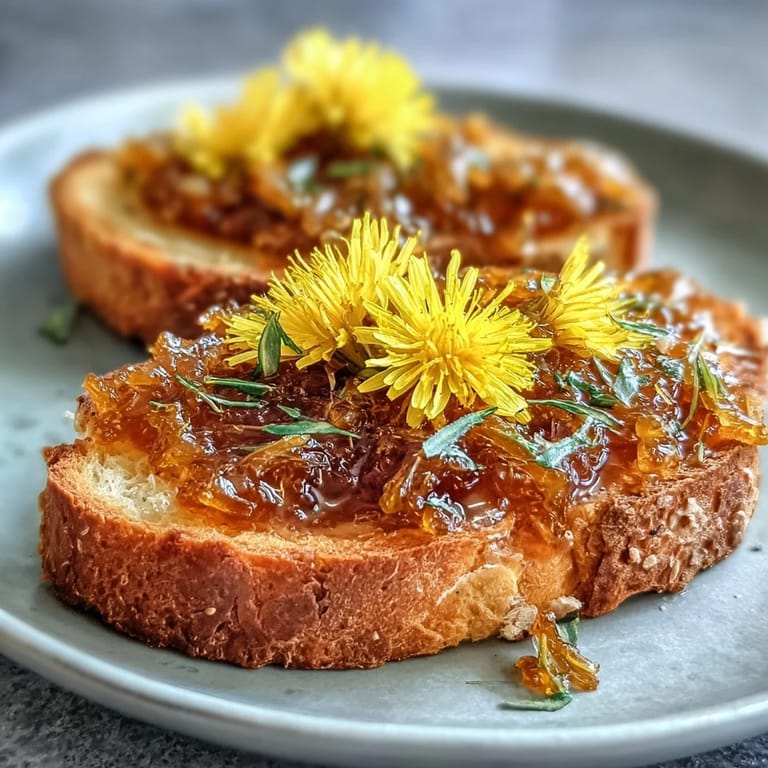 Save
Save This jelly will brighten any breakfast table, and each batch is a surprise in blossomy flavor. Sharing it is pure joy—every golden jar is a reminder that your kitchen can make a little bit of magic.
Recipe FAQs
- → How do I harvest dandelion petals?
Pick dandelion flowers from clean, pesticide-free areas. Pinch only the yellow petals and rinse thoroughly before use.
- → Why avoid green parts of the flower?
Green parts add bitterness to the spread. Use just the yellow petals for a delicate flavor and floral aroma.
- → Can I make the jelly less sweet?
Adjust sugar levels carefully. Reducing sugar may affect texture and preservation, but you can try using low-sugar pectin instead.
- → Is it necessary to process jars in a water bath?
Processing jars in a boiling water bath ensures shelf stability. Skip this step for a quick refrigerator version, but use soon.
- → What tools are needed for preparation?
A large saucepan, fine mesh sieve or cheesecloth, sterilized jars and lids, a funnel, and ladle make preparation easier.
- → Are there allergen concerns?
Dandelion jelly is free of common allergens. Check labels on pectin and sugar for potential traces if highly sensitive.