 Save
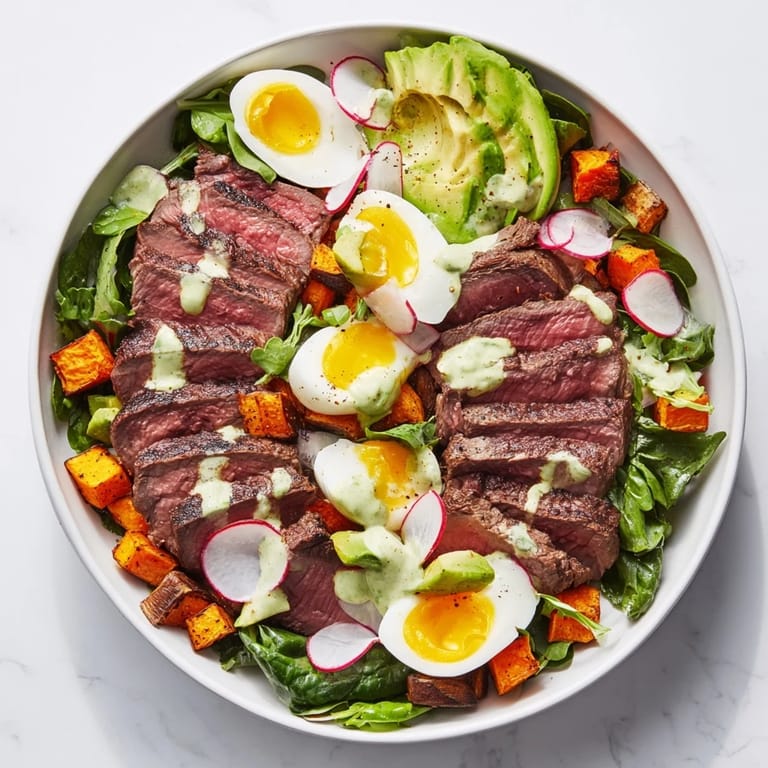
Save I discovered this bowl on a Tuesday when I had leftover roasted sweet potato and a perfectly ripe avocado sitting on my counter, practically daring me to do something interesting with them. The idea of building layers—greens first, then the warm and cool components—felt like arranging a edible landscape. There's something almost meditative about assembling a bowl where every element keeps its own texture and personality instead of getting lost in a sauce. That first bite, where the jammy egg yolk catches the citrusy dressing and mingles with the beef? That's when I knew this wasn't just lunch.
I made this for my partner on a Saturday afternoon when neither of us wanted to leave the kitchen, and we ended up talking through the whole assembly process like we were on a cooking show. The magic happened when they cracked into their egg and the yolk ran across everything—that moment when a bowl stops being practical and becomes something you actually want to remember.
Ingredients
- Beef sirloin or flank steak (200 g): Sirloin has enough marbling to stay tender even if you slightly overcook it, and flank is leaner if you prefer that—either way, slicing against the grain after it rests is the move that changes everything.
- Sweet potato (1 medium, diced): The natural sweetness caramelizes in the oven, creating a textural contrast with the creamy avocado that makes the whole bowl feel balanced.
- Avocado (1 ripe): Add it just before eating—if it sits in the bowl too long, it oxidizes and looks a bit sad, though the taste is still fine.
- Mixed salad greens (60 g): A mix of spinach and arugula gives you earthy and peppery notes; use whatever is crisp and fresh in your fridge.
- Cherry tomatoes (4, halved): Their acidity brightens everything else, especially when paired with the lemon in the dressing.
- Radishes (2, thinly sliced, optional): They add a sharp, clean crunch that keeps the bowl from feeling too soft and rich.
- Large eggs (2): Seven minutes gives you that golden, jammy yolk—not runny, not hard, just right—but you can adjust by 30 seconds if your stove runs hot or cold.
- Olive oil (2 tbsp total): Good quality matters here since it's touching everything; cheap oil makes the whole thing taste thin.
- Soy sauce (1 tsp): It adds umami depth to the beef without overwhelming it—swap for tamari if you need gluten-free.
- Greek yogurt (1 tbsp): Creamy and tangy, it replaces mayonnaise so the dressing feels lighter and fresher.
- Lemon juice (1 tbsp): Fresh squeezed is worth the extra 20 seconds; bottled tastes thin by comparison.
- Dijon mustard (1 tsp): A tiny amount adds complexity without any sharp mustard flavor taking over.
- Honey (1 tsp): Just enough to round out the acidity and add a whisper of sweetness to balance the lemon.
- Salt and black pepper: Season as you go with the vegetables, then taste the dressing and adjust—you might need less later than you think.
Tired of Takeout? 🥡
Get 10 meals you can make faster than delivery arrives. Seriously.
One email. No spam. Unsubscribe anytime.
Instructions
- Heat your oven and prep the sweet potato:
- Set the oven to 200°C (400°F) and toss your diced sweet potato with a tablespoon of olive oil, a pinch of salt, and a crack of pepper—the oil helps them crisp up at the edges while staying creamy inside. Spread them in a single layer on a baking sheet.
- Get the sweet potato golden:
- Roast for 20 to 25 minutes, stirring once halfway through if you think of it—you're looking for them to be tender when you poke them and golden at the edges. They'll still soften as they cool, so don't wait until they're completely soft.
- Season and sear the beef:
- While the sweet potato roasts, pat your beef dry with a paper towel, then rub it with the remaining tablespoon of olive oil, the soy sauce, and a generous amount of salt and pepper. Heat a grill pan or heavy skillet over medium-high heat until it's almost smoking.
- Cook the beef to your liking:
- Lay the beef in the hot pan and don't touch it for 2 to 3 minutes—that's when the crust forms. Flip it once and cook another 2 to 3 minutes for medium-rare, or longer if you prefer it more cooked. The thinner you have it, the faster it cooks, so adjust timing if your piece is unusually thick or thin.
- Rest the beef:
- Transfer it to a cutting board and let it sit for a few minutes—this keeps the juices from running all over your bowl later. Slice it thinly against the grain, which you can identify by looking at the lines running through the meat.
- Soft-cook the eggs:
- Bring a small saucepan of water to a gentle simmer, then carefully lower the eggs in using a spoon. Set a timer for 7 minutes—this gives you a firm white and a jammy, runny yolk. When the timer goes off, scoop them out into a bowl of cold water and let them cool.
- Make the dressing:
- In a small bowl, whisk together the Greek yogurt, lemon juice, Dijon mustard, and honey until smooth. Taste it and season with a small pinch of salt and a few grinds of pepper—you want it bright and balanced, not aggressively tangy.
- Assemble your bowls:
- Divide the greens between two bowls, creating a loose nest at the bottom. Arrange the warm roasted sweet potato, sliced beef, halved tomatoes, and radishes around the greens like you're creating a map of flavors. Add the avocado slices just before you eat.
- Add the eggs and finish:
- Peel and halve your soft-cooked eggs, then nestle them into the bowl. Drizzle the dressing over everything, trying to get it on as many different components as possible so each bite has some of that bright, creamy sauce.
 Save
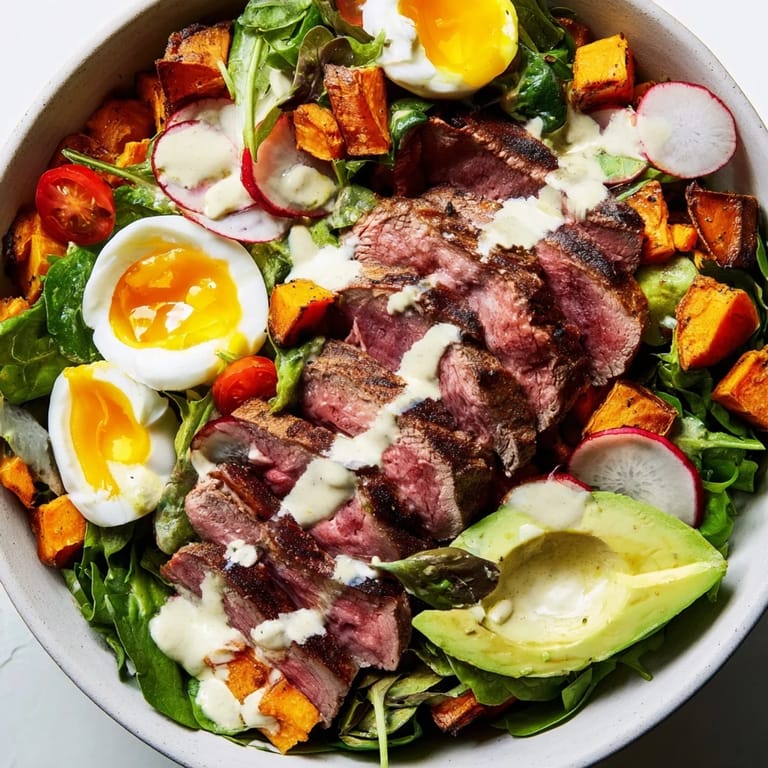
Save One evening I made this for myself after a long day, and sitting down with this bowl—the colors so bright they seemed to glow—I realized I was eating something that felt like real care, not just efficient fuel. That shift from duty to pleasure happens quietly in the kitchen sometimes.
Why Temperature Matters in a Bowl
The contrast between the warm roasted vegetables and beef against the cool, creamy avocado and fresh greens is what makes this bowl feel alive instead of monotonous. If you let everything go cold, it becomes one-note and heavy. The warm elements wake up your palate while the cool ones soothe it—that's the hidden architecture of why this bowl works. Don't overthink it, but do eat it soon after you assemble it so the temperatures are still distinct.
Making It Your Own
This bowl is genuinely flexible without becoming formless, which is why it's so satisfying to make again and again. If you have leftover roasted vegetables from another meal, they belong here. If chicken or tofu speaks to you instead of beef, the bowl doesn't mind. The dressing is the anchor—that bright, creamy thing that ties the randomness together. I've made this with different greens depending on the season, added seeds for crunch, even thrown in some cooked grains when I wanted something more substantial. The only thing I never skip is the egg, because that's where the magic lives.
Small Details That Shift Everything
Slicing the beef thinly against the grain means every bite includes meat instead of getting big chewy chunks. Resting the beef means the juices stay where they should and don't leak everywhere. Whisking the dressing until smooth instead of just stirring means every component gets a coating. These aren't complicated techniques—they're just small choices that separate an okay bowl from one you'll think about later.
- If your greens are wilted, soak them in cold water for 10 minutes before you start.
- The dressing keeps for a few days in the fridge, so you can make it ahead and drizzle it fresh when you eat.
- A squeeze of lime juice on the avocado slows down the browning, though honestly, a little oxidation isn't the end of the world.
 Save
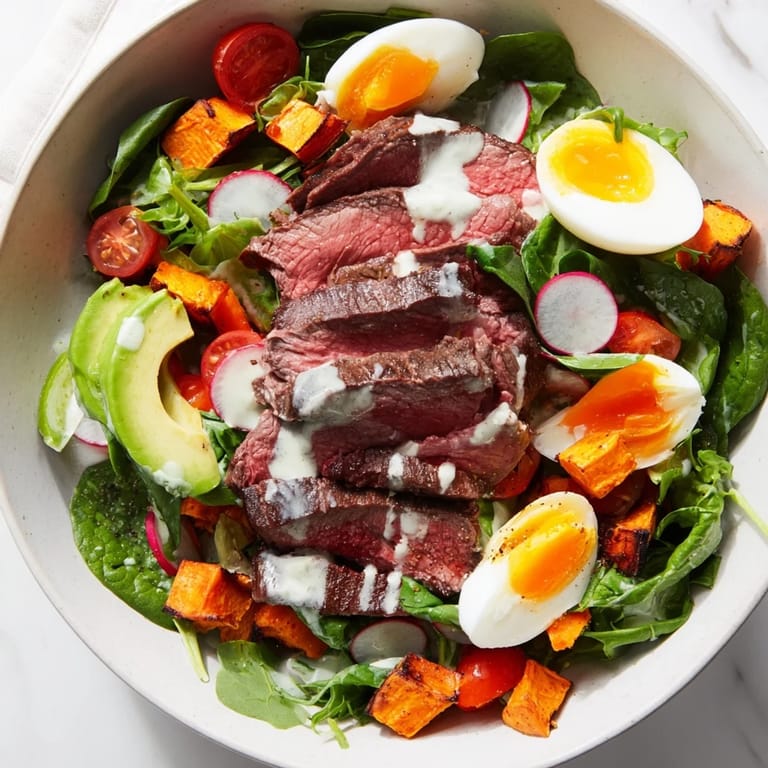
Save This bowl is the kind of meal that reminds you that simple food, made with attention and proper ingredients, doesn't need anything else to feel special. Eat it, enjoy it, and come back to it whenever you need something that feels both nourishing and good.
Recipe FAQs
- → How should I cook the beef for best flavor?
Use sirloin or flank steak, seared quickly over medium-high heat for a juicy, medium-rare finish. Rest before slicing to retain juices.
- → What’s the best way to prepare the sweet potato?
Dice and toss with olive oil, salt, and pepper, then roast at 200°C (400°F) for 20–25 minutes until tender and golden.
- → How do I achieve jammy yolks on the eggs?
Simmer eggs in gently boiling water for 7 minutes, then cool immediately in cold water before peeling.
- → Can I customize the dressing?
Yes, the dressing combines Greek yogurt, lemon juice, Dijon mustard, honey, salt, and pepper. Adjust ingredients to taste or try alternatives like avocado oil or different herbs.
- → What are good substitutions for dietary preferences?
Replace beef with grilled chicken or tofu for variety. Add quinoa or brown rice for extra energy, and sprinkle nuts or seeds for crunch.